
Hip dip filler before and after photos usually look most striking on the day of treatment, and they also show the least about how the result will settle. Hip dip filler is an injection of body filler into the inward curve on the side of the hips, between the pelvis and the thigh, to smooth out the outline. In Korea it is usually called pelvic filler. Below are four real hip dip filler cases from Kondae PPEUM Clinic in Seoul, with what each photo does and does not show. You will also find the answers our Medical Director, Dr. Park Hwonham, a surgeon trained at Seoul National University Hospital, gives patients in consultation. Before you book, keep three facts in mind. Hip dips are mostly a normal body shape that comes from your bones. Body filler uses far larger amounts than facial filler. And neither the US FDA nor Korea’s MFDS has approved any filler for increasing the size of the buttocks.
Hip dip filler at a glance
- What causes hip dips: a dip between two curves made by the pelvic bone and the top of the thigh bone (greater trochanter). Exercise does not “fix” it.
- How much filler: at Kondae PPEUM Clinic, usually up to about 100–300 cc for both sides combined. The amount varies a lot, so it is set at consultation.
- How long it lasts: hyaluronic acid is absorbed gradually. Some patients keep the shape for three to four years or more, and others top up after about a year.
- Right after: some swelling is unavoidable. Lumpy contours usually settle over two to four weeks, sometimes longer.
- Side effects: they are rare but real: late inflammation or infection, lumps, filler migration, and blocked vessels with skin necrosis.
- Filler vs fat transfer: filler can have the edge for a local curve like hip dips. Fat transfer is surgery, and the fat should go only under the skin, never into muscle.
Hip Dip Filler Before and After: 4 Cases from Seoul
All four patients had hip dip (pelvic) filler at Kondae PPEUM Clinic. Every after photo was taken right after the injection, so swelling or slight unevenness can show. These photos are not the settled result. Our records for these photos do not include the amount injected, the product batch or how the result looked weeks later, so we describe only the visible change in the outline at the side of the hips, where the dent sits between the pelvis and the thigh. Swelling right after treatment usually settles over the following weeks, and how the final shape looks varies from person to person. Lighting, camera distance and posture also change how a hip outline reads in a photo.
The photos below are blurred for visitors. Create a free account to see every before and after photo at full resolution.
Case 1: Hip dips from behind, both sides

Want a change like this case?
Send us this case and Dr. Park's team will tell you whether a similar plan could suit you.
- Before: on both sides, the outline curves inward below the hip bone before it widens again at the upper thigh, which gives a visible notch at the side of the hips.
- After: the line from the waist down to the thigh is rounder and runs more continuously, and the notch on each side is much shallower.
- Keep in mind: the after photo is brighter and warmer in tone, which makes the skin look smoother. Compare the side outline, not the skin.
Case 2: Hip dip below the hip line, back view

- Before: the sides of the hips step inward below the waistband, and a hollow sits where the buttock meets the outer thigh.
- After: the side outline is fuller, and the curve from hip to thigh looks rounder and more even on both sides.
- Keep in mind: the lighting and the patient’s stance differ slightly between the two photos, and swelling right after injection adds to the fullness.
Case 3: Wider hip outline, back view

- Before: there is a mild inward dip on each side between the hip and the upper thigh.
- After: the outline at the sides is fuller and the hip line looks wider and more continuous.
- Keep in mind: uneven texture on the lower buttocks in the after photo may reflect swelling right after injection or existing skin texture under different light.
Case 4: Hip dips seen from the front

Want a change like this case?
Send us this case and Dr. Park's team will tell you whether a similar plan could suit you.
- Before: seen from the front, the outline narrows inward just below the hip bone on both sides before the thighs begin.
- After: the outline from the waist to the upper thigh is straighter and fuller at the sides, with a smaller inward step.
- Keep in mind: the color tone and framing differ a little between the two photos, so judge the side outline rather than overall size.
For more body cases from the clinic, see our Onda Lifting before and after for upper arms and abdomen. For facial volume, our dermal filler guide explains how facial filler differs.
 WhatsApp
 LINE
 KakaoTalk
DR.BAQUO’s Answers on Hip Dip Filler
In November 2026, Dr. Park Hwonham, Medical Director of Kondae PPEUM Clinic, answered the questions patients ask most often about hip dip filler. His answers are below.
Can filler fill my hip dips, or is fat transfer better for some people?
“If you only think about the overall volume of the buttocks, both fat transfer and filler can create volume. But the hip and pelvic line shaped by the skeleton, and hip dips in particular, need volume to be held in one specific area, so in those cases I see filler as the better option.”
How many cc of filler do hip dips need before it shows?
“It varies a lot from case to case, so an in-person consultation matters. In our practice, we usually go up to about 100–300 cc in total for both sides.”
What if my hips are swollen, sore or lumpy after hip dip filler?
“Some swelling is unavoidable. Uneven, lumpy contours usually settle naturally over two to four weeks, sometimes longer. If some unevenness remains because the volume was not quite enough, I recommend a top-up injection.”
How does it change over the months, and will I need it again?
“It depends on the case. For some people it lasts three to four years or longer, while others come back for a top-up after about a year.”
What is different when you fly to Korea for hip dip filler?
“Western patients often have a larger frame, and they often want more volume than Asian patients. That means a larger amount is needed, but shaping the overall contour is actually a little easier. Korean patients often prefer a natural volume, so we discuss the design thoroughly before going ahead.”
What Causes Hip Dips?
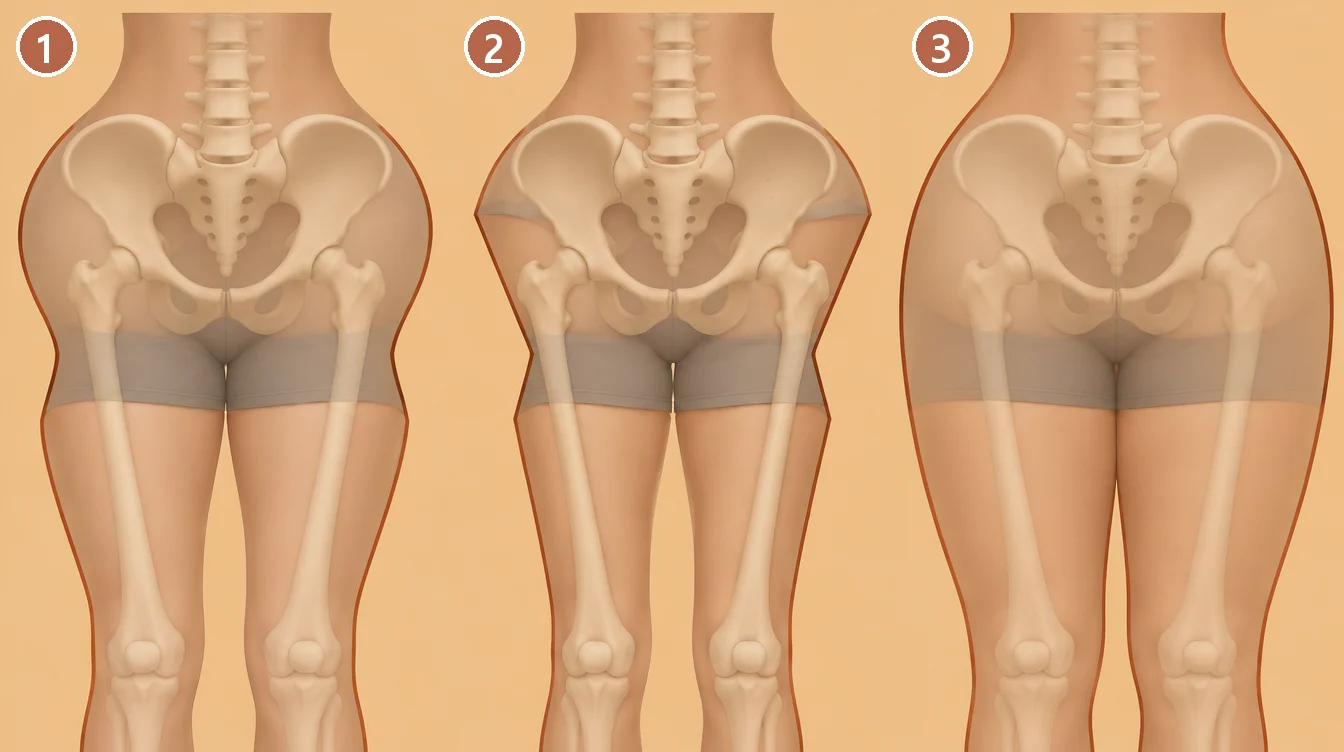
Cleveland Clinic describes hip dips as an inward curve on the side of the body between the hip and the thigh. The term came from social media. It is not a medical diagnosis.
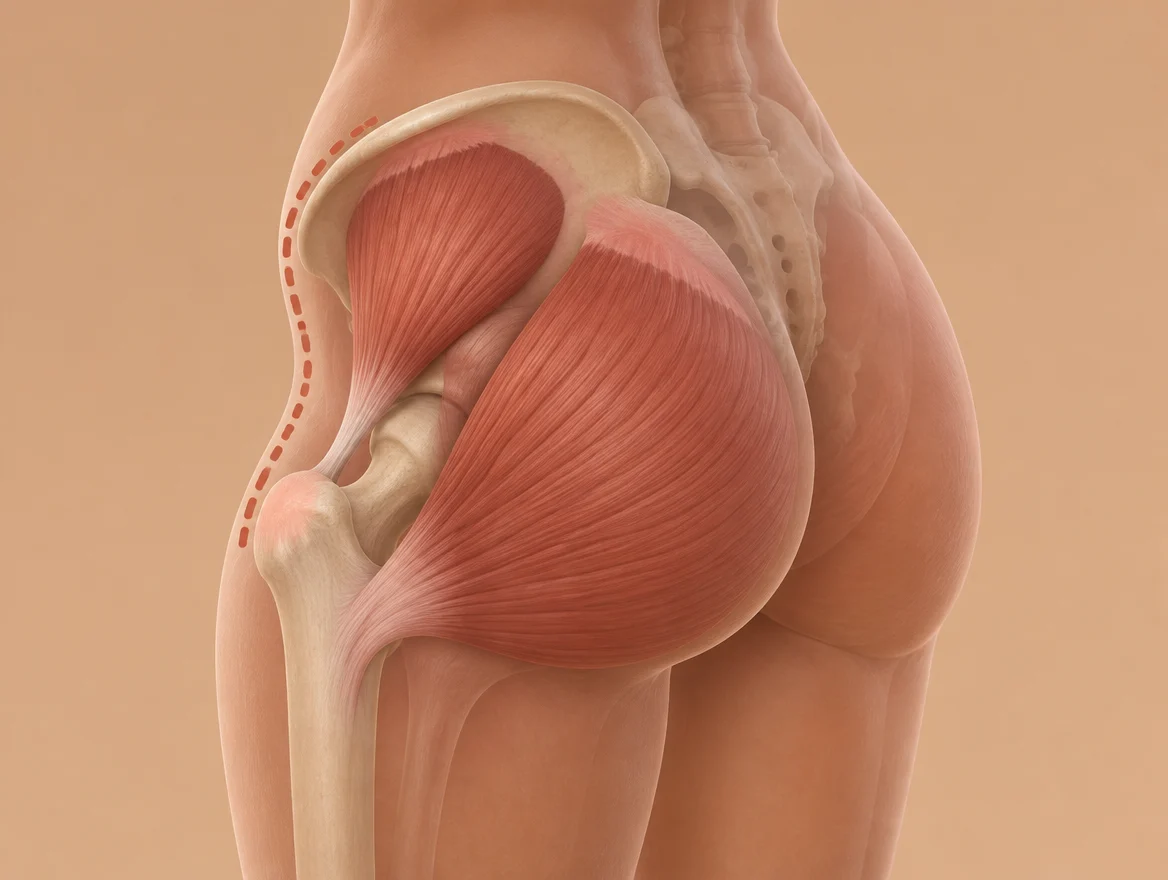
- Two curves made by bone: the top of the pelvic bone (ilium) makes the first rounded line of the hips. The femoral neck and the bony bump on the outside of the thigh bone, the greater trochanter, make the second. The hollow left between these two curves is the hip dip. How deep it is depends on pelvic width, femoral neck length and the size of the greater trochanter.
- Muscle and fat: muscle mass and fat distribution can make hip dips stand out more, but they are not the cause. A report by Brazilian doctors adds that exercise-shaped muscle contours or ageing can make the depression deeper.
- What surrounds it: the dip sits on the side of the buttock below the greater trochanter. It is framed by the attachments of the gluteus medius, vastus lateralis, quadratus femoris and gluteus maximus, in an area with few ligaments holding it firmly.
- Is it a health problem? Cleveland Clinic says hip dips are nothing to worry about. Treating them is purely a choice about shape.
Hip Dips Exercise: Can Training Fix Hip Dips?
Hip dips come from bone shape, so Cleveland Clinic says that losing weight or building muscle will not “fix” them. Glute exercises can make the hollow look a little less visible, because muscle and fat change how much the bone shape shows. They cannot change the pelvis or the thigh bone. That is also why a hip dip shaped by bone may not become completely flat after filler, and it is worth discussing this before treatment.
What Is Hip Dip Filler? Hyaluronic Acid, Sculptra or Fat
| Material | How it fills | What the studies show |
|---|---|---|
| Hyaluronic acid body filler | Fills straight away with the gel’s own volume. Body products are firmer and have larger particles than facial ones. | Mostly small studies with short follow-up. The gel is absorbed gradually, so it needs repeating. |
| PLLA (Sculptra, a collagen-stimulating injection) | Thickens the dermis and fat layer over several weeks rather than filling at once. It takes several sessions a month apart. | One randomised hip dip study (15 people). Body use is off-label. |
| Your own fat (fat transfer) | Fat taken by liposuction elsewhere is moved to the hips. | The most studied option. The fat that survives stays. Injecting into muscle carries a risk of fat embolism. |
| Polyacrylamide, liquid silicone and similar | Non-absorbable materials. | Cases of abscesses and serious injury. The FDA has not approved injectable silicone for any cosmetic use. |
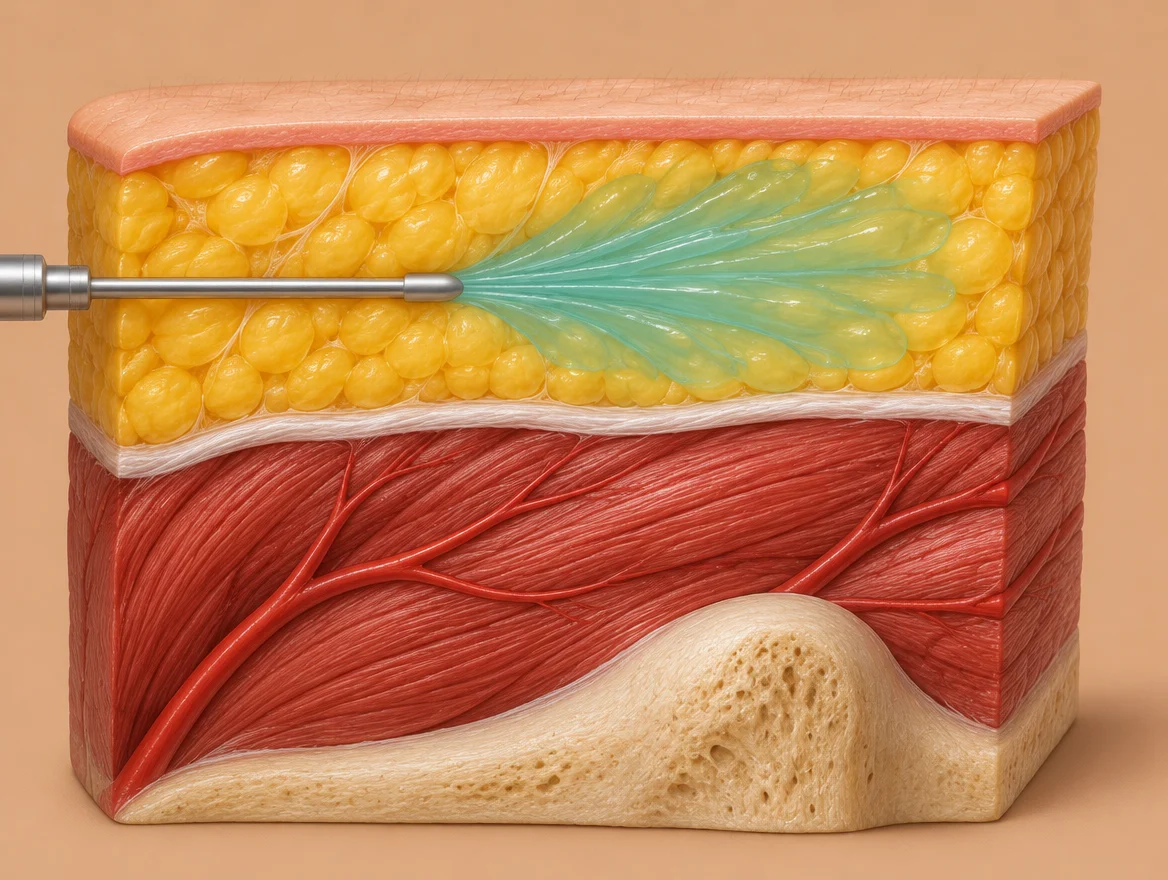
- Body hyaluronic acid is not facial filler: a comparison of four body fillers found that they fill larger volumes and face greater mechanical stress than facial fillers. Their firmness (elasticity) also varied widely between products, so the product has to suit the area. In the Brazilian hip dip report, a firm, large-particle product went into the middle layer of the subcutaneous fat through an 18G cannula, 10 mL per side per session.
- Sculptra (PLLA) for hip dips: in a randomised study, 15 women with hip dips had PLLA on one side and saline on the other, three times a month apart. Only the PLLA side thickened: the dermis by 26.1% and the fat layer by 27%. In records of 498 people treated off the face at nine US centres, 60.3% of PLLA sessions were for the buttocks and hip dips. Bruising occurred in 5.0% and nodules in 0.2%. For facial use, see Sculptra in Korea.
- How strong the evidence is: a review of 52 buttock augmentation studies (7,834 people) found only 69 people treated with hyaluronic acid injections. It described the effect as real but temporary and expensive. A second review found only 12 usable reports on filler buttock augmentation, mostly with low-level evidence, and warned that it is not as simple and harmless as advertised. Several of the studies were supported by manufacturers or importers, or had company staff as authors.
Is Hip Dip Filler FDA Approved?
- US FDA: the FDA advises against using fillers for body contouring and gives increasing the size of the buttocks as an example. It has not approved these uses. Injectable silicone is not approved for any cosmetic use.
- Korea’s MFDS: its 2019 guidance says cosmetic fillers are mainly approved for facial wrinkles and facial volume. It lists volume enhancement of body areas such as the buttocks and calves as an unapproved purpose, and says no product had been approved for it.
- PLLA and calcium hydroxylapatite: a 2026 review says most body uses of these collagen-stimulating fillers, including the buttocks, are off-label.
Off-label use does not automatically mean the treatment is illegal or dangerous. It does mean that the product’s effect and safety for that use were not reviewed in its approval. Ask which product will be used and what it is approved for. MFDS also advises checking the label and package insert.
How Much Hip Dip Filler Do You Need?
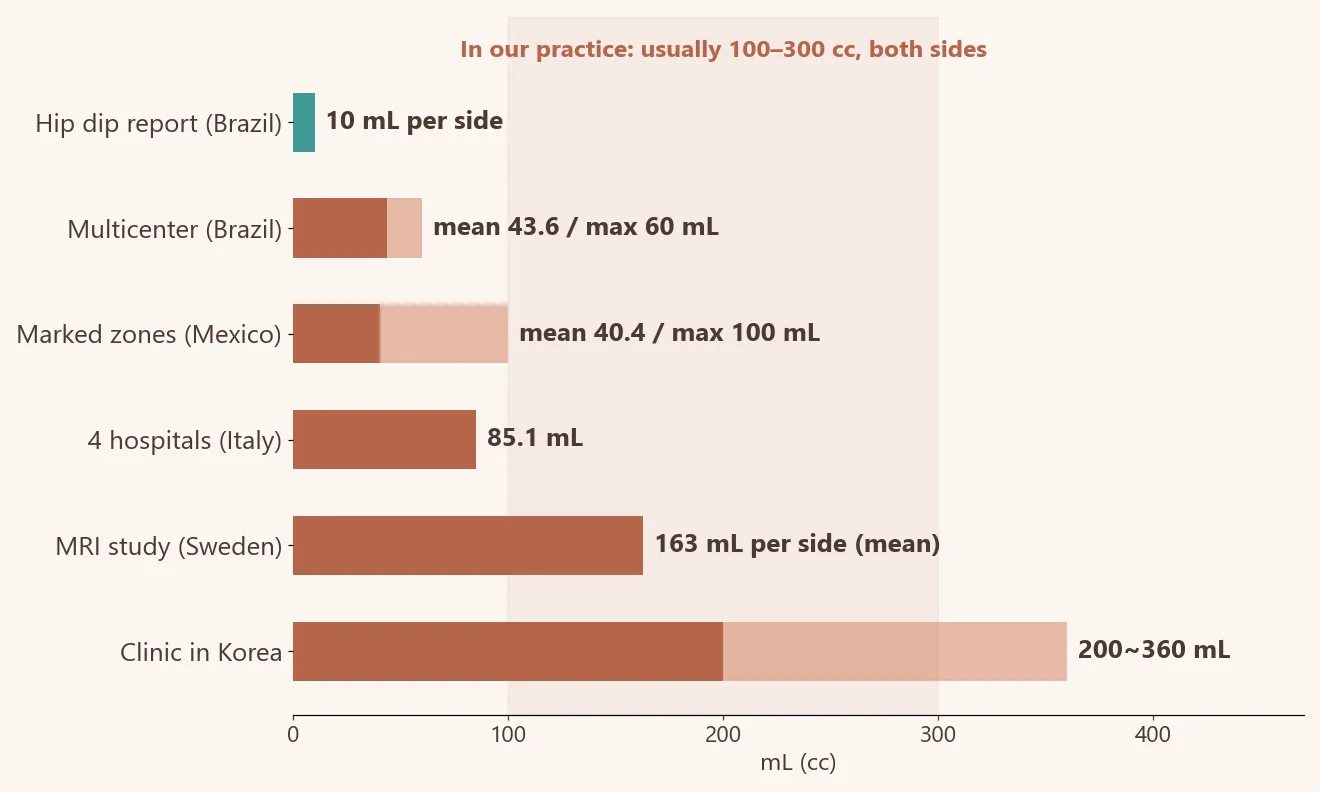
| Study | Who | Amount |
|---|---|---|
| Hip dip report (Brazil, 2024) | 11 women, hip dips | 10 mL per side per session, one more session after 15 days if needed |
| Multicentre study (Brazil, 2025) | 30 women, buttocks | Up to 60 mL, mean 43.6 mL |
| Marking technique study (Mexico, 2025) | 26 women, buttocks | Up to 100 mL, mean 40.4 mL |
| Four-hospital study (Italy, 2025) | 35 people, buttocks | Mean 85.1 mL |
| Korean clinic study (2026) | 26 women, buttocks | 200–360 mL in total |
| MRI study (2013) | 8 people, buttocks | Mean 163 mL per buttock |
The amount depends on whether only the hip dips are filled or the whole buttock is enlarged. In the Mexican study, about 40 mL on average increased buttock circumference by 1.1–2.2 cm right after treatment. The more you inject, the more foreign material goes into your body. In the Brazilian multicentre study, blood hyaluronic acid rose briefly at day 30 and was close to baseline by day 90. At Kondae PPEUM Clinic, the total for both sides usually goes up to about 100–300 cc (1 cc is 1 mL). Bone shape, fat thickness and the shape you want make a big difference, so the amount is set at an in-person consultation.
How Long Do Hip Dip Fillers Last?
Hyaluronic acid does not stay forever. It is broken down and absorbed gradually, so the shape is fullest right after treatment and shrinks over the following months.
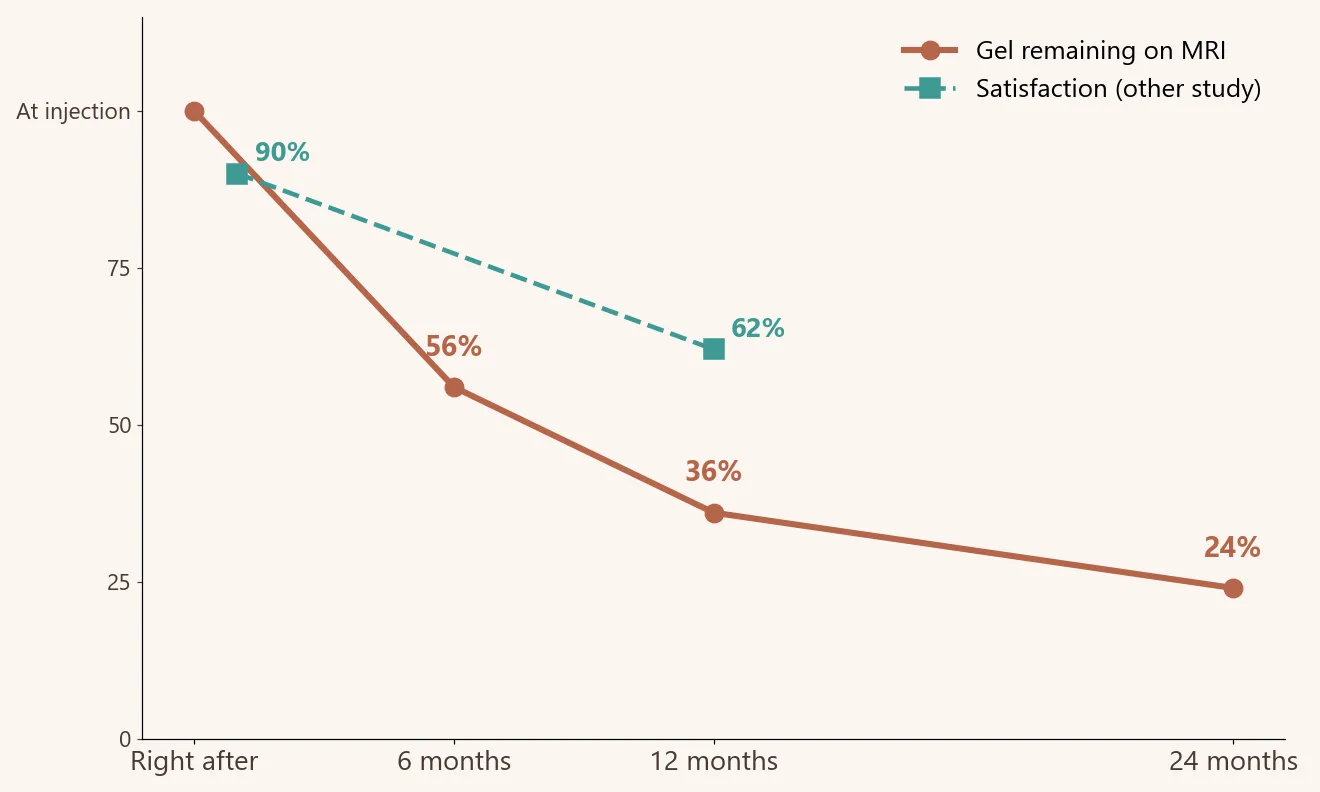
- Measured by MRI: in the study with a mean of 163 mL per buttock, the gel remaining was 56% at 6 months, 36% at 12 months and 24% at 24 months, mostly in the subcutaneous fat. Even so, 60% rated their buttocks as improved through 24 months.
- Satisfaction over time: in the Brazilian multicentre study, satisfaction fell from 90% at day 30 to 62% at 12 months. The authors read this as consistent with the hyaluronic acid breaking down. On ultrasound, the filler was gradually absorbed, with no migration, fibrosis or nodules.
- Repeat treatment: the authors of the hip dip report said the result needs repeat treatment to be maintained.
- In practice: at Kondae PPEUM Clinic, some people keep the shape for three to four years or longer, and others come back for a top-up after about a year. It depends on the amount, the product and changes in your body.
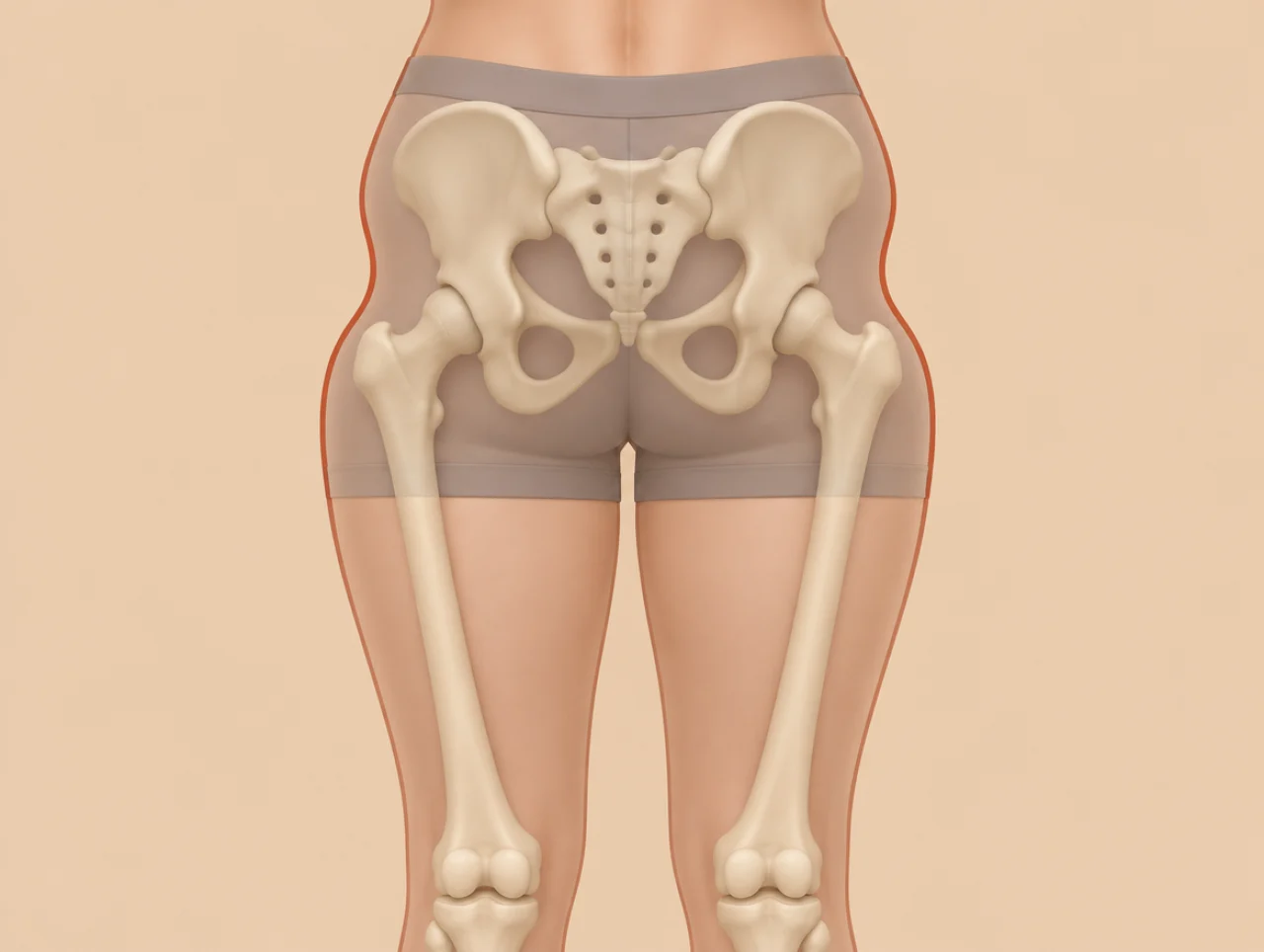 Before
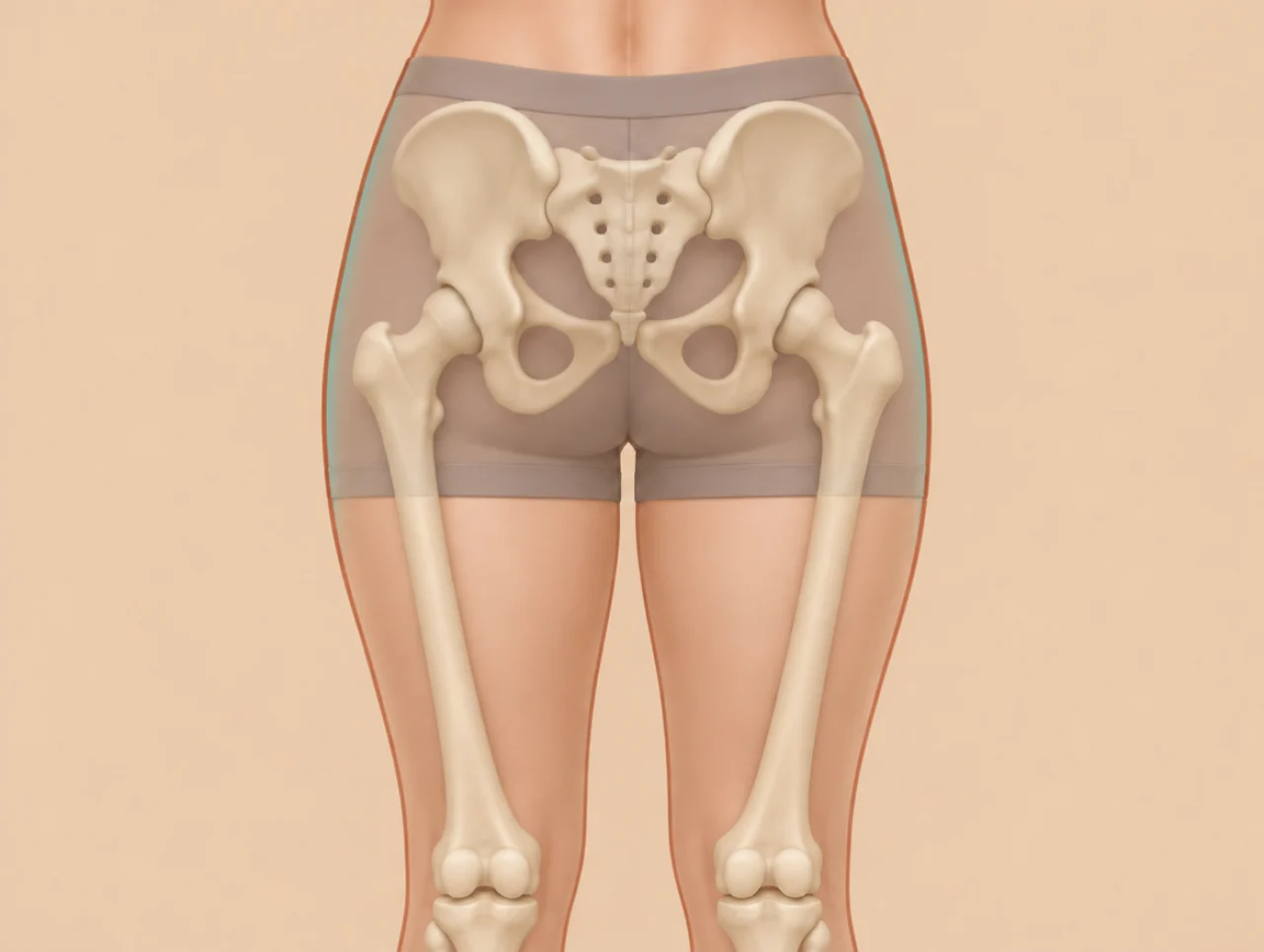 A few weeks later
After Hip Dip Filler: Swelling, Pain and Lumps
| Time | What usually happens |
|---|---|
| Right after | Swelling, bruising and tenderness are common. Follow the clinic’s advice on sitting, lying down and exercise. |
| 2–7 days | In studies, swelling, bruising, pain and redness usually settled by this point. |
| 2–4 weeks | Lumpy contours gradually settle. For some people it takes longer. |
| Months to a year or more | Hyaluronic acid is absorbed gradually. If the volume falls short, a top-up is discussed. |
In the four-hospital Italian study, adverse events were mostly mild or moderate and settled within two to seven days. Swelling, pain and redness were the most common. In the hip dip report, mild bruising and pain lasted two to three days. In the Korean clinic study, 5 of 26 women (19.2%) had mild swelling, bruising or temporary firmness, and these resolved on their own. The buttocks carry your weight when you sit. When you can sit for long periods, lie on your side or exercise depends on the amount and placement.
Hip Dip Filler Side Effects
The studies above reported no serious adverse events. However, most had a few dozen people and six to twelve months of follow-up, which is too small to catch rare complications. The side effects of filler listed by Korea’s MFDS are itching, inflammation and pain, bruising and swelling, skin necrosis, blindness or reduced vision, leakage of the injected material, migration to unintended areas, and temporary or long-lasting nodules.
- Late inflammation or infection: late reactions to hyaluronic acid filler usually appear three to four months after treatment. Experts name three causes: the filler’s own properties, a biofilm introduced during treatment or already latent, and immune dysregulation. Non-infectious reactions are treated with hyaluronidase. If it is an infection, drainage, culture and antibiotics are needed first.
- Migration: in one case, hyaluronic acid injected into the buttocks moved to the inner thigh and showed up as a soft lump. The authors reported it as very rare.
- Blocked vessels and embolism: filler that enters a vessel can block it and cause skin necrosis. In one reported case, a woman had buttock hyaluronic acid injections at a non-medical beauty facility. Within hours she developed reduced consciousness, low blood oxygen, and lesions in the lungs and brain.
- Non-absorbable materials: in another case, a woman needed surgery for abscesses running from the buttocks to the calves after polyacrylamide filler in the buttocks.
- If something goes wrong: ultrasound can show which filler is in the buttocks and where it sits, and can help diagnose complications early.
Get medical care right away if
- the skin over the treated area turns white, blotchy purple or dark red, and the pain keeps getting worse
- days or months later, the area swells again, feels hot and red, or you get a fever
- pus comes out, or a lump grows and hurts
- you become short of breath, have chest pain or feel confused after treatment (go to the emergency room)
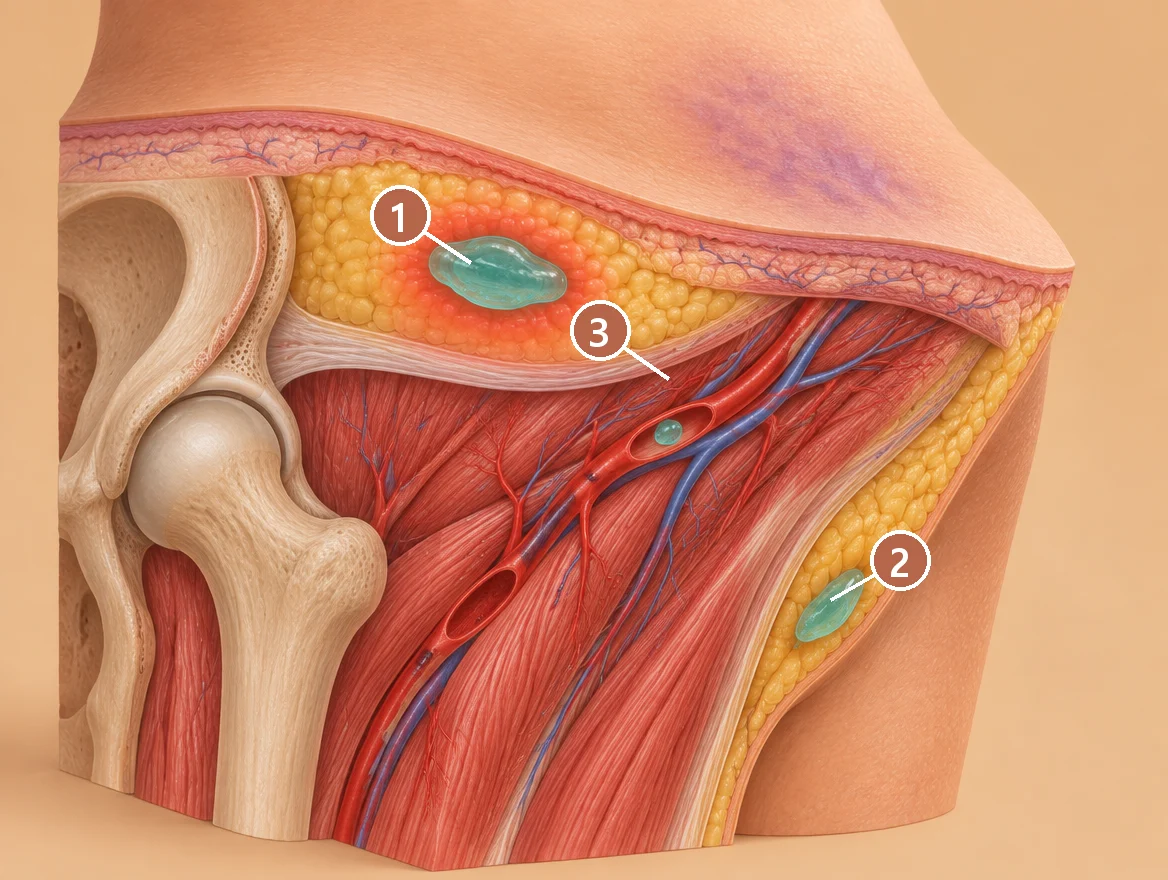
Hip Dip Filler vs Hip Dip Surgery: Hip Dip Fat Transfer
The usual hip dip surgery is fat transfer. Fat is taken by liposuction, for example from the thighs or belly, and moved to the hips. The British Association of Aesthetic Plastic Surgeons says subcutaneous gluteal fat grafting is used to correct trochanteric depressions (hip dips) and flat buttocks.
| Hyaluronic acid hip dip filler | Hip dip fat transfer | |
|---|---|---|
| Method | Injection through a cannula | Liposuction plus injection (surgery) |
| What stays | MRI study: 36% left after one year, 24% after two | Subcutaneous-only study: thickness fell 18.16% over 12 months. 3D-measured retention was 64.7% at 6 months. |
| Evidence | Mostly small studies with short follow-up | The most studied option (meta-analysis of 22,151 people) |
| Main risks | Rarely infection, migration or blocked vessels | Rarely fatal pulmonary fat embolism when fat is injected into muscle |
| Approval | No filler approved for buttock volume (FDA, MFDS) | Surgery performed by a doctor |
- Fat embolism: a 2017 US survey reported 32 deaths from pulmonary fat embolism among 198,857 gluteal fat grafting cases. Embolism was significantly more common when fat was injected deep into muscle. Vessels inside the muscle are larger and denser than those under the skin.
- After the recommendations: once surgeons were advised to avoid injecting into muscle, mortality trended down from 1 in 3,448 to 1 in 14,952. BAAPS puts the risk at about 1 in 15,000, similar to abdominoplasty. In a meta-analysis of 38 studies, pulmonary embolism occurred in 0.04%, and complications were fewest with subcutaneous-only or ultrasound-guided injection.
- Other risks: seroma (2.03%) and contour irregularity (2.29%) were reported. Hypothermia, sepsis and skin necrosis have also been reported, with higher risk in poorly regulated facilities and medical tourism.
- When filler alone falls short: the filler review notes that body contouring may need removing volume as well as adding it.
No studies compare the two directly. As Dr. Park explains above, both can add overall buttock volume. For a local curve shaped by the skeleton, such as hip dips, he sees filler as the better option.
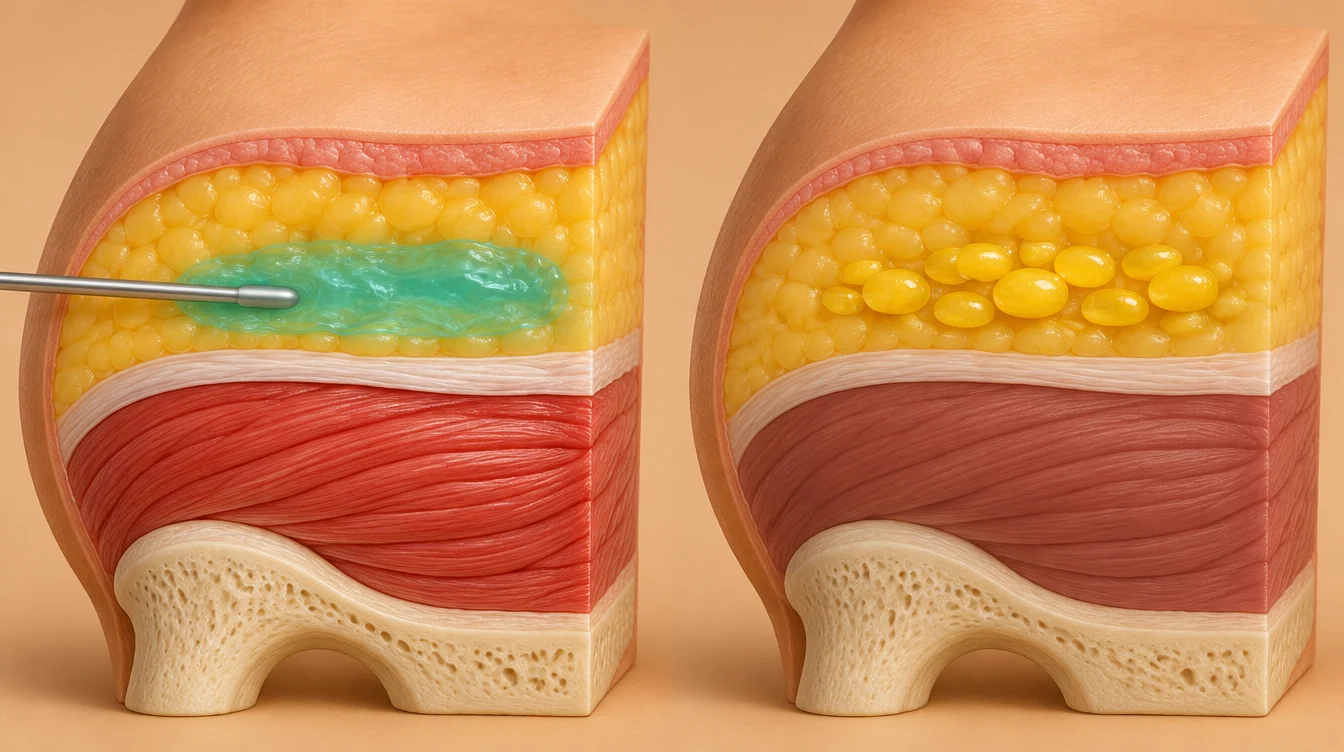
Getting Hip Dip Filler in Seoul: What to Check
- Which product: ask for the product name and what it is approved for. Find out whether it is a body hyaluronic acid, PLLA or a non-absorbable material.
- Who injects: MFDS advises getting filler from a doctor experienced in injections. The embolism case above happened at a non-medical beauty facility.
- Expectations: MFDS advises discussing the result you expect in advance and not deciding on impulse.
- Your flight: swelling and tenderness are common in the first days, and you sit on a long flight home. Ask how many days to stay before you book (see our Korea medical tourism guide and first-time Korean clinic guide).
- Take the record home: ask for the product, the amount and the layer in writing. It helps any doctor at home if swelling, a lump or infection appears later.
Kondae PPEUM Clinic is directly connected to Konkuk Univ. Station Exit 1 in Seoul.
Hip Dip Filler Cost in Korea
Kondae PPEUM Clinic’s current standing prices for pelvic (hip dip) filler are listed below. Event prices are not included, and prices may change.
- Pelvic filler (hip dip filler), 1cc: KRW 39,000
- Hip dip filler, 100cc: KRW 3,000,000
- Pelvic filler (hip dip filler), 200cc: KRW 5,500,000
- Collagen hip dip pelvic filler, 200cc: KRW 7,500,000
The total depends on how many cc you need, which is set at consultation, and on the product. When comparing clinics, line up the same product and the same amount.
FAQ: Hip Dip Filler Before and After
Q: Is hips dips filler the same as hip filler or buttock filler?
A: The names are used loosely for similar procedures. Hip dip filler usually means filling only the hollow at the side of the hips. Buttock filler usually means enlarging the whole buttock, and the amount injected differs a lot.
Q: How many cc of filler do hip dips need?
A: At Kondae PPEUM Clinic, the total for both sides usually goes up to about 100–300 cc. Bone shape and the shape you want make a big difference, so the amount is set at consultation.
Q: How long do hip dip fillers last?
A: Hyaluronic acid is absorbed gradually. In an MRI study, 36% of the gel remained after one year and 24% after two. In Dr. Park’s practice, some people keep the shape for three to four years or more, and others top up after about a year.
Q: Can hip dip filler be dissolved?
A: Hyaluronic acid filler can be dissolved with hyaluronidase. If infection is suspected, drainage, culture and antibiotics come first. PLLA and non-absorbable materials do not dissolve with this enzyme.
Q: Is hip dip filler safer than hip dip fat transfer?
A: No studies compare them directly. Fat transfer is well studied, and its risk fell once injecting into muscle was avoided, but it is surgery. Filler is an injection, but no product is approved for buttock volume and the studies are small and short.
Q: Can I sit down right after hip dip filler?
A: It depends on the amount and placement, so follow the clinic’s aftercare. In studies, swelling and pain usually settled within two to seven days.
Q: How do I see the full-resolution before and after photos?
A: Create a free DR.BAQUO account. Members can view every case in this post without blur.

Related Before & After Cases and Guides
- Hollow Temples Treatment in Korea: Gouri & HILO WAVE Before and After
- Skin Booster Before and After Korea — Gouri + HILO WAVE Results
- Lip Filler Before and After Seoul — DR.BAQUO Results
- Cheek Filler Korea: Get Natural Volume in One Day
- Double Chin Treatment Korea: Seoul's Most Effective Fix
- Before & After gallery (members)
Sources
- Cleveland Clinic Health Essentials. Hip Dips: Your bone structure determines whether you have a visible dent between your hips and your thighs, 2024. clevelandclinic.org
- Lourenco L et al. Hip dips technique: Filling lateral depressions with hyaluronic acid of large particles. Skin Health Dis, 2024. PubMed 39624740
- Fontenete S, Alfertshofer M. Rheological and Physicochemical Properties of Hyaluronic Acid Fillers for Body Contouring. J Cosmet Dermatol, 2026. PubMed 41715300
- Hur JH et al. Clinical Evaluation of Hyaluronic Acid Filler for Gluteal Augmentation: A Retrospective Study. Plast Reconstr Surg Glob Open, 2026. PubMed 42517060
- Bussade M et al. Assessment of Hyaluronic Acid Filler in Gluteal Augmentation and Contouring: A 1-Year Prospective Study. J Cosmet Dermatol, 2025. PubMed 41423732
Show 22 more sources
- Iribarren-Moreno R et al. Hyaluronic Acid Gluteal Augmentation: New Marking and Application Technique. Plast Reconstr Surg Glob Open, 2025. PubMed 41282456
- Crabai P et al. Evaluating the Safety and Satisfaction of HYAcorp MLF2 for Noninvasive Buttock Augmentation: A Multicenter Study. Plast Reconstr Surg Glob Open, 2025. PubMed 39839444
- Camenisch CC et al. Macrolane for volume restoration and contouring of the buttocks: magnetic resonance imaging study on localization and degradation. Plast Reconstr Surg, 2013. PubMed 24076699
- Oranges CM et al. Gluteal Augmentation Techniques: A Comprehensive Literature Review. Aesthet Surg J, 2017. PubMed 28203698
- Atiyeh B et al. Safety and Efficiency of Minimally Invasive Buttock Augmentation: A Review. Aesthetic Plast Surg, 2023. PubMed 35999464
- Korea Ministry of Food and Drug Safety (MFDS), via Korea.kr policy briefing. Precautions for cosmetic filler procedures, 2019. korea.kr
- U.S. FDA. Dermal Fillers (Soft Tissue Fillers), content current as of 2023-07-06. fda.gov
- Butterwick KJ et al. The FDA-Approved and Non-FDA-Approved Indications for Biostimulatory Fillers off the Face. Dermatol Surg, 2026. PubMed 42975435
- Zubair R et al. SPLASH: Split-Body Randomized Clinical Trial of Poly-L-Lactic Acid for Adipogenesis and Volumization of the Hip Dell. Dermatol Surg, 2024. PubMed 39503574
- Durairaj KK et al. Nonfacial Use of Injectable Poly-L-lactic Acid: Safety Data From a Multicenter Observational Study in the United States. Aesthet Surg J Open Forum, 2026. PubMed 42004285
- Baranska-Rybak W et al. Late-Onset Reactions after Hyaluronic Acid Dermal Fillers: A Consensus Recommendation on Etiology, Prevention and Management. Dermatol Ther (Heidelb), 2024. PubMed 38907876
- Saad A et al. A Rare Case of Migration of Hyaluronic Acid Gluteal Injection to the Medial Thigh Presenting as a Soft Lump. Indian J Radiol Imaging, 2023. PubMed 37123580
- Uz İ et al. Fat embolism syndrome after gluteal augmentation with hyaluronic acid: A case report. Ulus Travma Acil Cerrahi Derg, 2020. PubMed 33107954
- Wünscher SV et al. Long-term Complications of Gluteal Augmentation Using Aquafilling Filler: A Case Report. Indian J Plast Surg, 2023. PubMed 37435334
- Ducati EPJ et al. Reviewing the Ultrasound Anatomy of the Gluteal Region and the Mapping of Fillers. J Cosmet Dermatol, 2025. PubMed 41097881
- Mofid MM et al. Report on Mortality from Gluteal Fat Grafting: Recommendations from the ASERF Task Force. Aesthet Surg J, 2017. PubMed 28369293
- Rios L, Gupta V. Improvement in Brazilian Butt Lift (BBL) Safety With the Current Recommendations from ASERF, ASAPS, and ISAPS. Aesthet Surg J, 2020. PubMed 32306045
- Tillo O et al. The British Association of Aesthetic Plastic Surgeons (BAAPS) Gluteal Fat Grafting Safety Review and Recommendations. Aesthet Surg J, 2023. PubMed 36495200
- Elsaftawy A et al. Gluteal Augmentation with Fat Grafting: A Systematic Review and Meta-Analysis of Complications and Procedural Factors. Plast Reconstr Surg, 2026. PubMed 41051287
- Seabra Robalo Gomes Jorge AC et al. Danger Zones of the Gluteal Anatomy: Improving the Safety Profile of the Gluteal Fat Grafting. Aesthetic Plast Surg, 2024. PubMed 38302712
- Cansancao AL et al. Subcutaneous-Only Gluteal Fat Grafting: A Prospective Study of the Long-Term Results with Ultrasound Analysis. Plast Reconstr Surg, 2019. PubMed 30688886
- Wang B et al. B-ultrasound-assisted gluteal fat grafting in Asians: A prospective study of quantitative results from three-dimensional imaging and B-ultrasound analysis. J Plast Reconstr Aesthet Surg, 2024. PubMed 38729047
The photos show real patients of Kondae PPEUM Clinic. No faces appear in these photos, and eyes are blurred wherever a face is shown on this site. Every after photo was taken right after injection. Results vary between individuals, and one case does not predict another. Doctor’s answers: Dr. Park Hwonham, Medical Director, Kondae PPEUM Clinic, November 2026.
DR.BAQUO | Hanlim Tower 2F, 229 Achasan-ro, Gwangjin-gu, Seoul | Konkuk University Station Exit 1 (Line 2) | Google Maps | LINE: @364kbfyj | global.drbaquo.com
—
VISIT
Kondae PPEUM Clinic
Dr. Park Hwonham (DR.BAQUO), Medical Director
- Address
- Hanlim Tower 2F, 229 Achasan-ro, Gwangjin-gu, Seoul
- Subway
- Line 2 Konkuk Univ. Station Exit 1 (directly connected)
- Hours
- Mon–Fri 10:00–20:30 · Sat 10:00–16:30 (KST)
 WhatsApp
 LINE

 WhatsApp
 LINE
 WeChat
 Instagram
 YouTube
 TikTok
 KakaoTalk

