
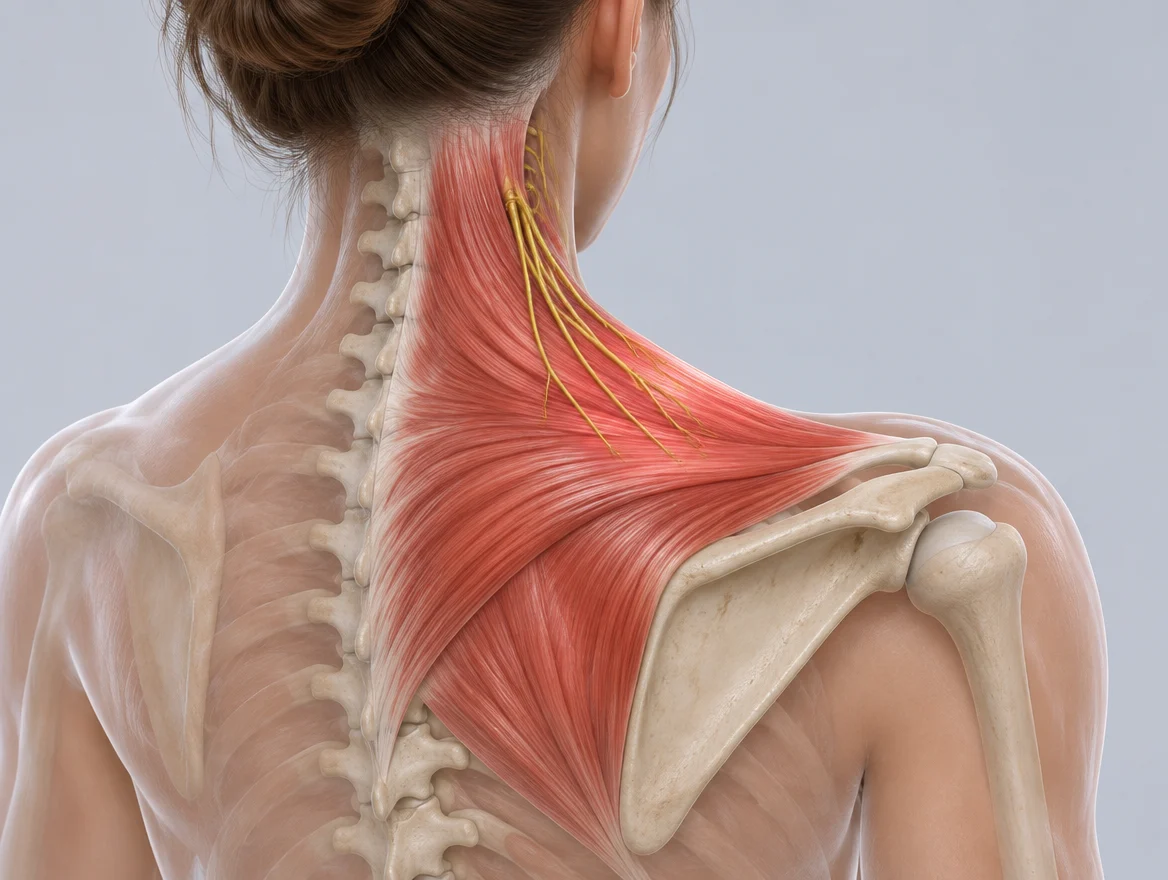
Trap Botox is botulinum toxin injected into the upper trapezius, the muscle that rises from the side of your neck to the top of your shoulder. As the muscle weakens and slims down over several weeks, the line from neck to shoulder can sit lower and look softer, and the neck can look longer. You will also see it called traps Botox, trap tox or shoulder Botox. The change is gradual, it is temporary, and in Korea it is an off-label use of botulinum toxin. This guide sets out what the research shows and what Dr. Park Hwonham, Medical Director of Kondae PPEUM Clinic in Seoul and a surgeon trained at Seoul National University Hospital, tells patients: who trap Botox suits, how many units are used, when results show, how long they last and what can go wrong.
Trap Botox at a glance
- Who it suits: people whose upper trapezius muscle is built up, so the neck-to-shoulder line sits high
- Who should skip it: people whose shoulder line comes mainly from fat, bone shape or posture, or whose main goal is pain relief
- Units: Dr. Park usually uses about 200 units in total, spread over several shallow points; units differ between products
- When it shows: starting about 2 weeks after injection, often clearest around 2–3 months
- How long it lasts: wears off from about 3–4 months; muscle function is mostly back by about 6 months
- Main risks: temporary shoulder and arm weakness, bruising, swelling, uneven sides; rarely, toxin spreading beyond the injected area
Will Trap Botox Work for You? Muscle, Fat or Bone
The trapezius is a wide, flat muscle. It starts at the back of the skull and the neck vertebrae and runs out to the shoulder blade and the outer end of the collarbone. Its upper part, between the neck and the shoulder, is what shapes the slope you see in a photo taken from the front. When that upper section is bulky, the neck looks shorter and the shoulders look lifted. Carrying a heavy bag on one shoulder, working for long hours with your shoulders hunched up, or doing a lot of shoulder training can all build this area up further.
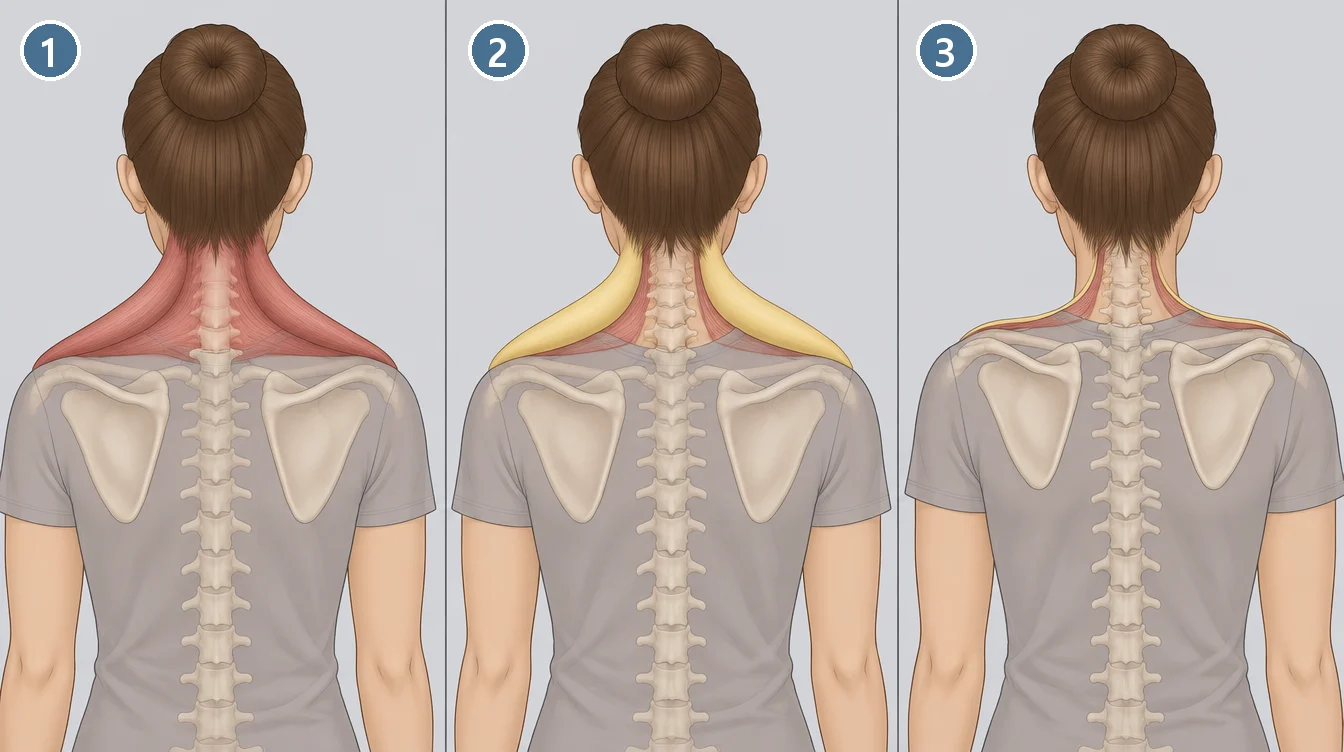
Not every high shoulder line is muscle, though. Three things shape it, usually together:
- Muscle: a thick upper trapezius. This is the type trap Botox can change, because the toxin shrinks muscle.
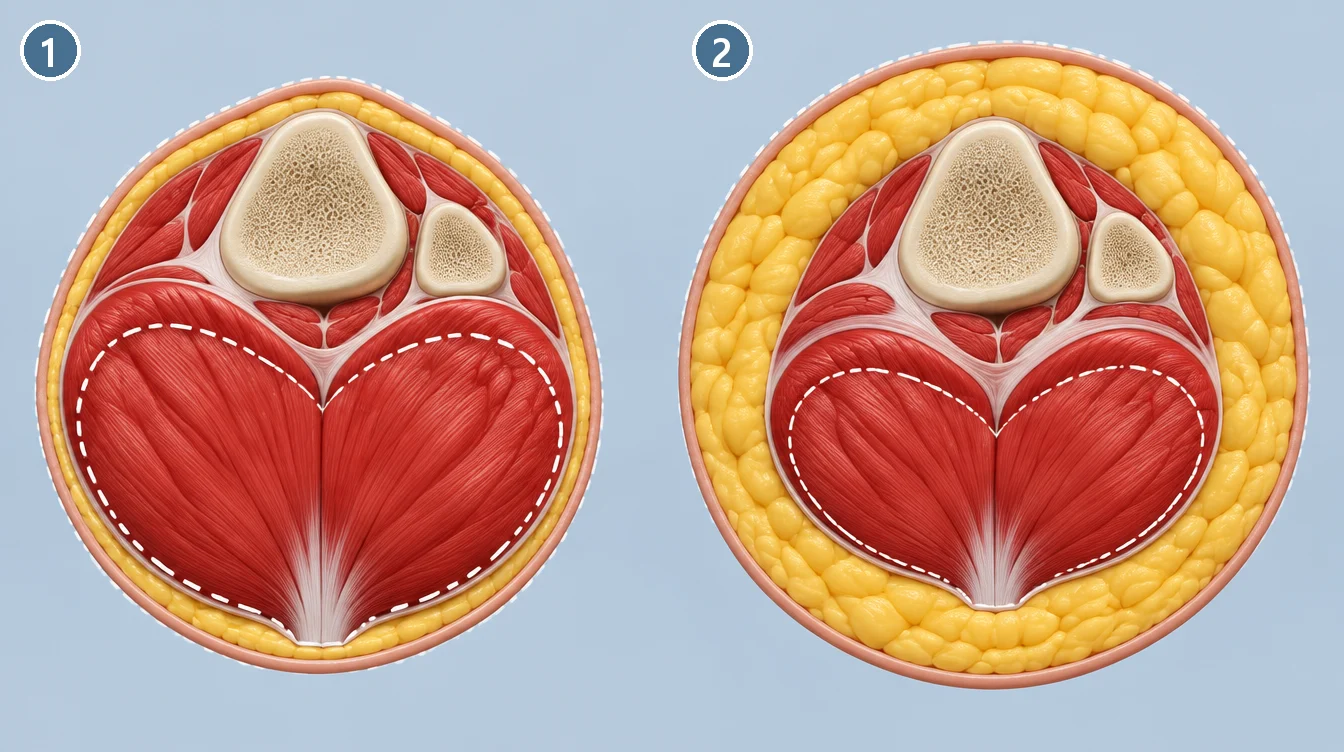
- Fat: a thick layer of fat under the skin between neck and shoulder. Botox does not act on fat, so the change may be small.
- Bone: a shoulder blade and collarbone that sit high. If the muscle and fat are already thin, there is little for the toxin to reduce.
Posture plays a part as well. A 2023 ultrasound study from Peking Union Medical College Hospital measured the trapezius in 40 young women and found that fat thickness, muscle thickness and the depth from skin to the middle of the muscle all increased from the front of the shoulder toward the back. The researchers proposed grading trapezius enlargement from 0 to 2 by shoulder angle. In practice this means the same-looking shoulder can be mostly muscle in one person and mostly fat in another, which is why the cause should be checked before anyone talks about units.
Dr. Park’s rule is simple: he recommends trap Botox when the trapezius is developed enough to push the neck-and-shoulder line up. When the muscle shrinks, the neck can look longer and the shoulder line more delicate. If the shoulders look raised mainly because of fat or bone shape, he checks that first, because the result may be modest.
Can exercise or massage shrink your traps instead?
Plenty of videos promise to “get rid of traps” with stretching or massage. We could not find studies that directly measure how much exercise, massage or stretching reduces trapezius thickness, so we cannot give you a number. What is reasonable to say is that posture and daily habits make you use the trapezius more or less, so they are worth paying attention to whether or not you get injections.
How Many Units of Trap Botox, and How Many Sessions?
This is the question Reddit threads get stuck on, because the numbers people quote vary so much. Published studies used quite different doses:
| Study | Who | Dose and technique | What happened |
|---|---|---|---|
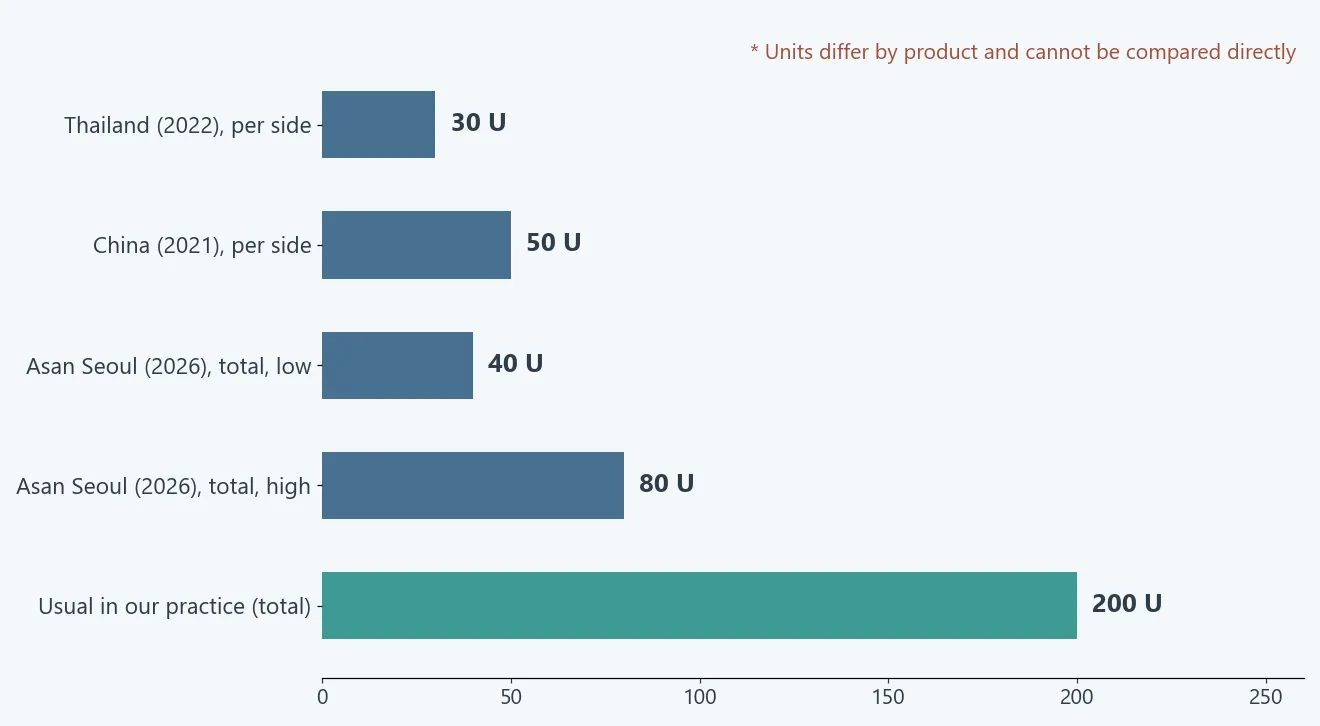
| Asan Medical Center, Seoul (2026), randomized double-blind | 20 women | Korean toxin (letibotulinumtoxinA), 40 or 80 units in total, 10 points | Trapezius area smaller in both groups at 12 weeks; no difference between doses; no complications; median satisfaction 4 out of 5 |
| China (2021) | 20 women | Ultrasound-guided, 5 points and 50 units per side | Muscle measured thinner from week 4 to week 44; visible shape change at week 12 |
| Thailand (2022) | 20 people | Ultrasound-guided, 30 units per side (Xeomin one side, Botox the other) | Similar thickness at day 60; the Botox side returned more toward its original size by one year |
| Korea (2018), anatomy + 13 volunteers | 13 volunteers | 6 points, 2 cm apart, in the zones where the nerve enters the muscle | Muscle thinner at 4 and 12 weeks |
So research doses range roughly from 25–50 units per side, or 40–80 units in total. You cannot simply compare those figures with what a clinic uses, because each botulinum toxin product has a different toxin content, and units from one product cannot be converted into units of another, according to Korea’s Ministry of Food and Drug Safety (MFDS) approval information. A unit count only means something next to the product name.
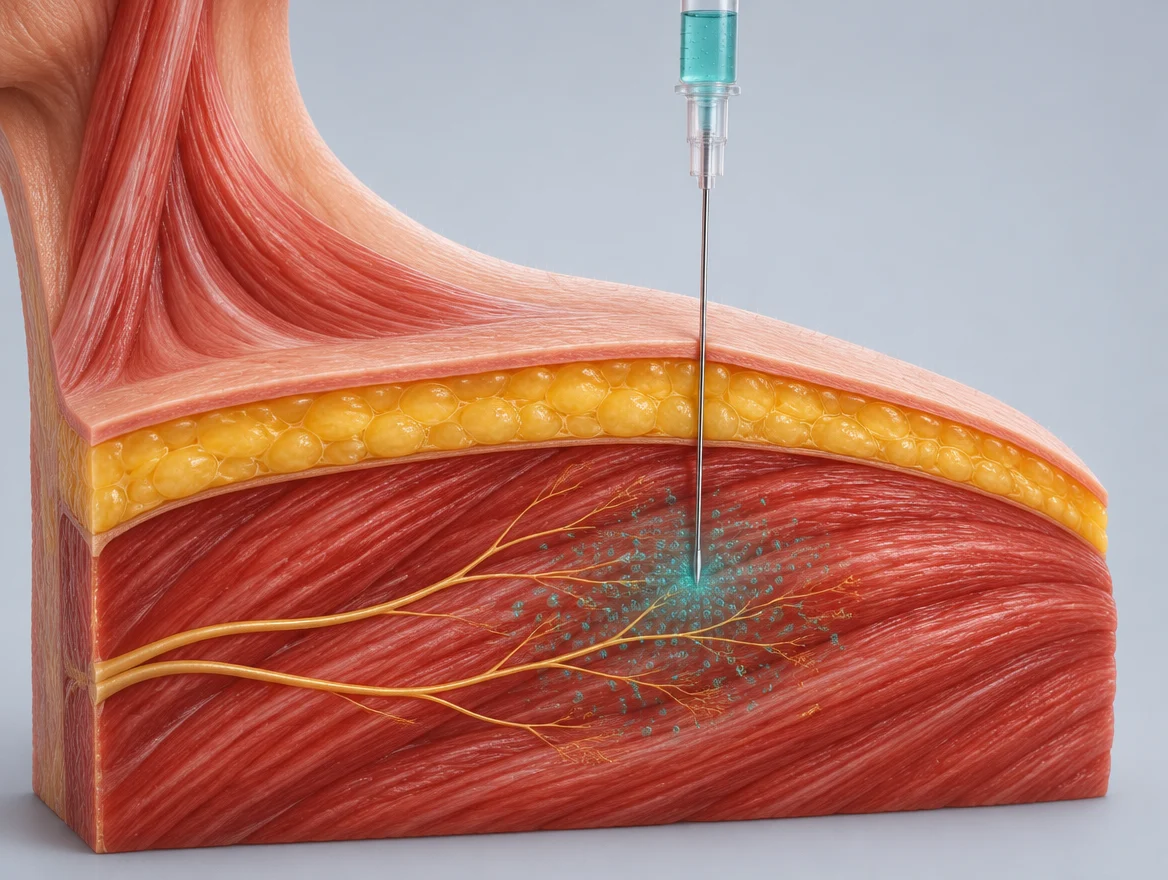
At Kondae PPEUM Clinic, Dr. Park usually injects about 200 units into the upper trapezius, where the neck joins the shoulder, divided across several points and placed not too deep. That can look high next to the studies above, but again, the units are not interchangeable between products. In his experience one or two sessions are often enough to see a clear effect. Because the trapezius also helps lift your shoulders and arms, he advises stopping rather than pushing on if the treatment makes everyday life inconvenient.
Where the injections go
Placement matters as much as dose. The 2018 Korean anatomy study found that the nerve branches entering the upper trapezius (from the accessory nerve) were concentrated in two zones, one in about two-thirds of cases and the other in about one-third, and suggested six injection points 2 cm apart in those zones. A 2024 Korean anatomy study mapped where nerve branches spread most densely inside the upper trapezius, the deltoid and the back of the upper arm, and proposed those zones as effective and safe injection sites. In a 2024 randomized trial of 30 young Chinese women, injecting along the nerve distribution reduced trapezius thickness, shoulder area ratio and shoulder angle more at 3 and 6 months than the conventional method. At 1 month there was no difference, and the women rated their own improvement about the same with both methods. No serious adverse events were reported.
Can frequent trap Botox cause resistance?
If your body makes neutralizing antibodies against the toxin, later injections can work less well. An overview of 5 systematic reviews and 203 studies (17,815 people, 2022) found antibody rates of 1–2.1%, and close to none or negligible for cosmetic use. Short intervals, high doses and the amount of antigenic protein in the product were the risk factors named. Because body contouring uses larger doses, a 2022 survey of 128 Asia-Pacific physicians recommended using a highly purified product from the start, especially for young patients whose lifetime dose will add up, and taking a break of 2–2.5 years if the effect fades. The MFDS notes that the safety of frequent dosing has not been established, and the Xeomin label asks for at least 3 months between treatments. More on this in why Botox can stop working.
 WhatsApp
 LINE
 KakaoTalk
Botox for Traps: When Results Show and How Long They Last
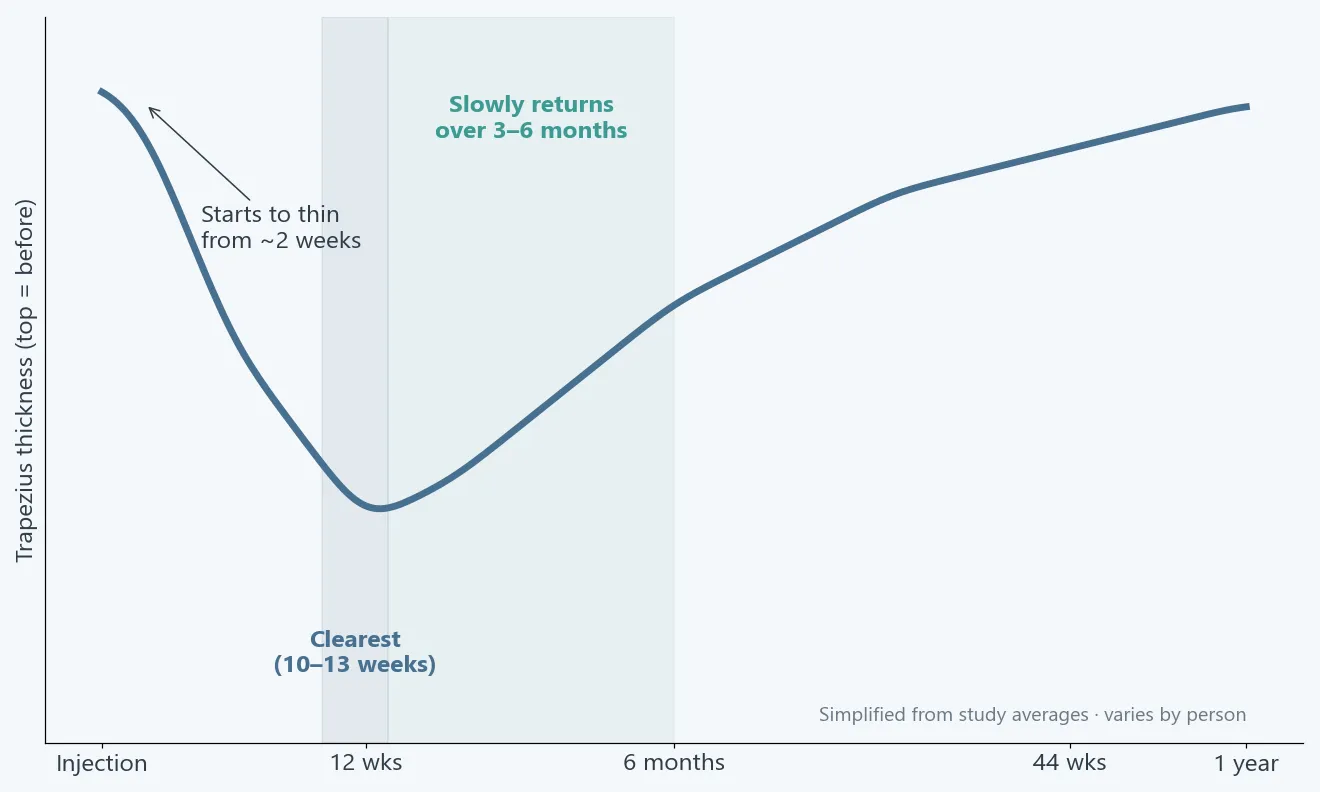
The toxin briefly blocks the nerve signal that tells the muscle to contract. A muscle that works less gradually loses bulk, so the shape changes weeks later, not on the day of the injection. A 2024 review of face and body contouring with neuromodulators found that body-area effects usually begin about 2 weeks after injection and are often clearest around 70–90 days. Dose depends on how strong and deep the muscle is.
| Time after injection | What usually happens |
|---|---|
| Same day to a few days | Possible swelling, bruising or stiffness at injection points; the shape looks the same |
| Around 2 weeks | Muscle strength starts to drop; lifting the arm or heavy things can feel weaker |
| 2–3 months | The muscle has slimmed; the shoulder line change is often clearest |
| 3–6 months | The toxin is gradually cleared; by about 6 months function is mostly back |
Individual studies show how much this varies. In a 2018 Chinese study, 30 women whose large trapezius made the neck look short had one treatment and were followed for 4–12 months; 93% were rated “improved” or better by both patients and doctors, while doctors rated 7% as “no change.” In the 2021 study above, the muscle stayed thinner than at baseline until week 44, and 80% of women were very satisfied, 15% fairly satisfied and 5% not satisfied. In the Thai study, the Xeomin side was still thinner than before at one year. These are all small studies of a few dozen people.
Dr. Park’s working timeline is more conservative: the toxin is metabolized and cleared from about 3–4 months, and by about 6 months new nerve receptors have formed and the muscle works almost as before. A 2016 review adds that muscle shrinkage from repeated injections is temporary and reversible, and that the effect may last longer as treatments are repeated. If you plan around an event, count backward at least 2–3 months.
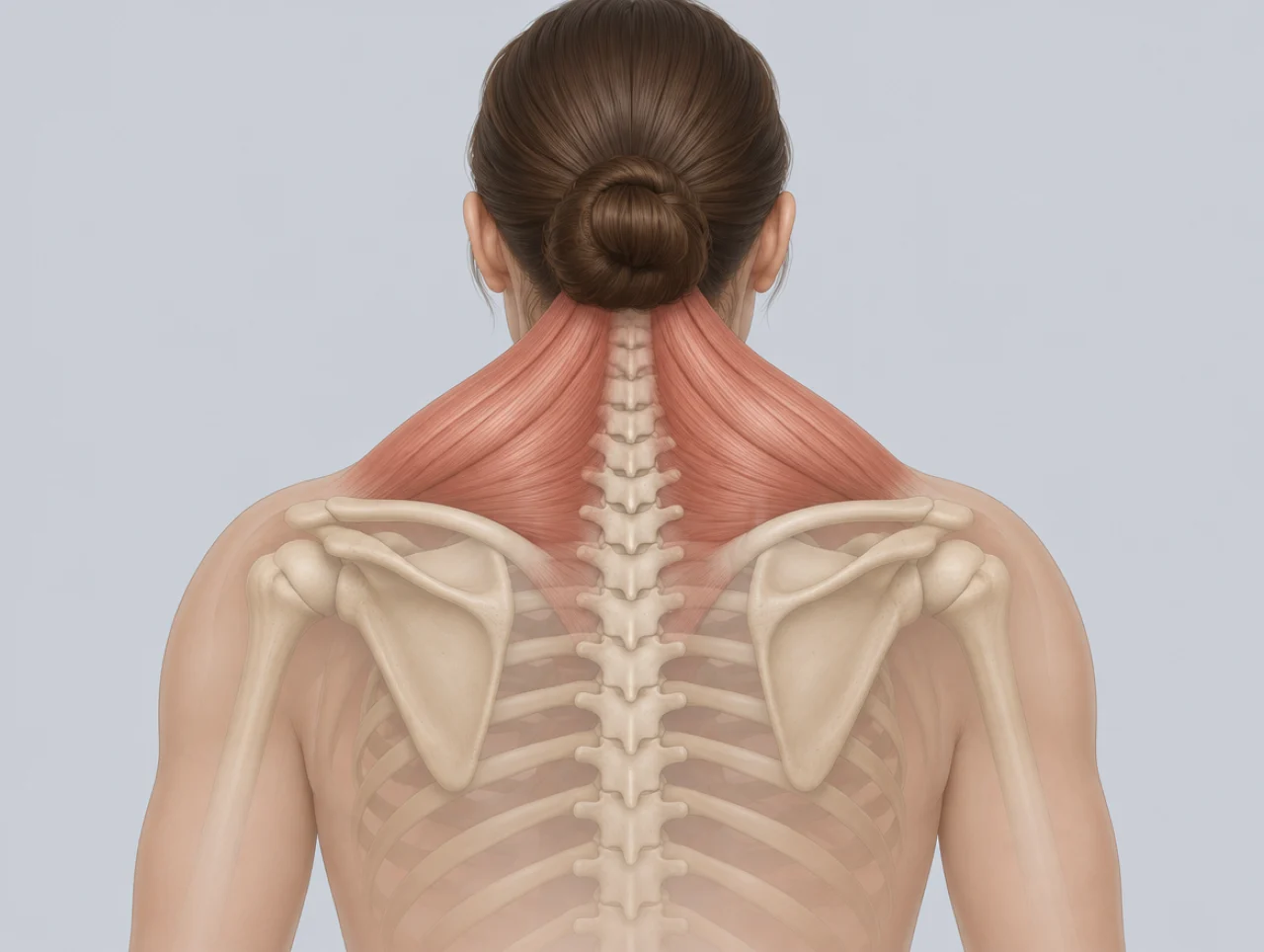 Before
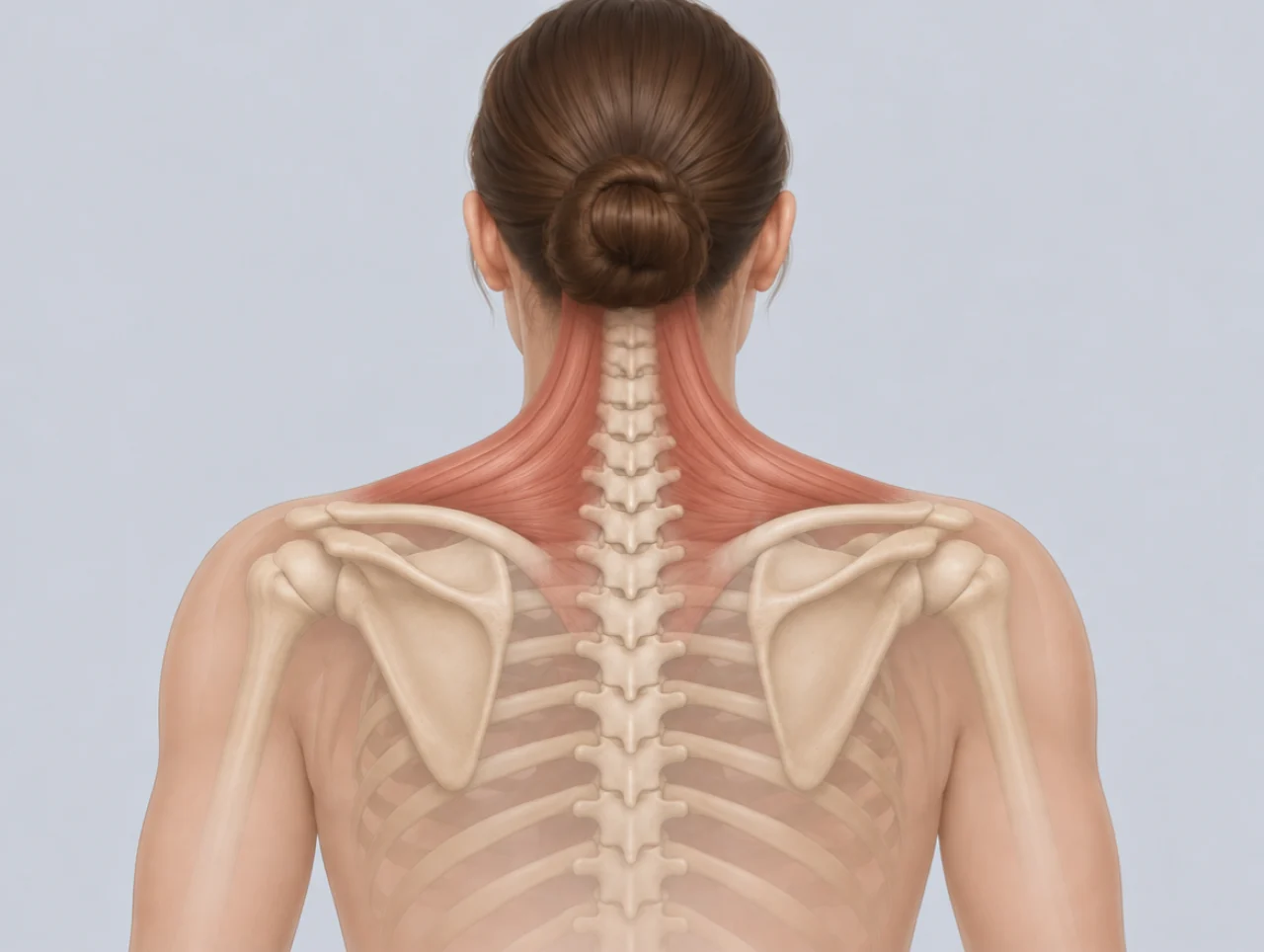 Weeks later
Trap Botox Side Effects and Off-Label Status
First, the regulatory picture, stated plainly. Under MFDS approval information, the cosmetic indications of botulinum toxin products in Korea are mainly facial, such as frown lines and crow’s feet. Trap Botox and calf Botox are off-label uses. A 2026 systematic review and meta-analysis of non-wrinkle cosmetic uses (38 studies, 1,903 people) confirmed that many of these uses are off-label, with neck, arm and calf contouring among them. Overall satisfaction was 94% and few complications were reported, but the authors called for more standardized techniques and assessment. That is why the decision should combine the research with the doctor’s experience.
In the trapezius studies, no serious side effects were reported; the reactions that did occur were mild and resolved. The 2024 contouring review lists temporary muscle weakness as a possible side effect of body toxin. The trapezius raises the shoulders and helps lift the arms overhead, so for a few weeks you may notice:
- less strength when lifting your arm or carrying something heavy
- a stiff or tight feeling in the neck and shoulders
- bruising, swelling or tenderness at the injection points
- a difference between the left and right sides
Signs that need a doctor right away
The MFDS precautions warn that any botulinum toxin can, rarely, spread far from where it was injected. Seek medical care immediately if you notice:
- difficulty swallowing, breathing or speaking
- drooping eyelids, double vision or weakness all over the body
- an injection site that keeps getting more swollen and hot, or a fever
Activity while your shoulders feel weak
Dr. Park asks patients to be as careful as possible with risky exercise and getting into water (swimming included) while the weakness lasts. Strength comes back to a fair degree with time, so the caution only applies during that window. If you lift things overhead at work or train your shoulders hard, tell the doctor before treatment. He also notes that physical therapy or massage can be combined if the discomfort is significant.
Trapezius Botox for Neck and Shoulder Pain
Many people look up trapezius Botox hoping it will ease tight, aching shoulders. The research does not support recommending it for that. A 2025 meta-analysis of 7 randomized controlled trials (261 people) with neck and shoulder myofascial pain found that toxin lowered pain scores by only about 10 points out of 100 more than saline, a difference the authors judged not clinically meaningful, and they concluded it cannot be recommended for this pain. A 2024 systematic review of 10 trials (651 people) on upper-back myofascial pain found mixed, low-quality results and no clear evidence that toxin beats comparison treatments, although no serious adverse events were reported. In a 2015 Thai double-blind trial, a single 20-unit injection into an upper trapezius trigger point did no better than saline at 3 and 6 weeks; both groups also did stretching and posture correction.
So treat trap Botox as a way to change the shape of the shoulder line. If pain is your main problem, the cause (posture, a disc problem, a shoulder condition) should be checked first.
Calf Botox in Korea, in Brief
Calf Botox works on the same principle, targeting the muscle at the back of the calf (gastrocnemius). A 2020 review of leg contouring in East Asians described it as a non-surgical alternative that appears effective with few immediate side effects, while noting that the definition of enlargement, the minimum effective dose and long-term effects still need study. The numbers on circumference are modest:
- Small but measurable change: in a 2024 Korean randomized double-blind trial (20 people, 40 legs), mid-calf circumference fell on average from 36.35 cm to 35.87 cm at 8 weeks, with no difference between 60 and 100 units per side. The lead investigator received funding from the toxin manufacturer. An earlier Korean study (2004, 6 women, 32–72 units per side into the inner calf muscle) saw the muscle shrink from week 1, holding to 6 months without functional problems; circumference fell slightly in 5 of 6.
- Fat changes satisfaction: in a 2024 Chinese study of 50 people given 300 units, those with thin or thick calf fat were satisfied with calf shape at 6 months, but the middle group was not, and all three groups were unhappy with the change in leg circumference. The authors stressed consultation beforehand.
- Balance: in a 2026 Taiwanese study of 15 healthy women, step length and walking speed did not change, but the fine control used to keep balance while walking did. If you often wear high heels or have any fall risk, discuss it first.
- Rare case report: a 22-year-old woman developed severe leg swelling and pain 3 days after 300 units for calf enlargement and was diagnosed with deep vein thrombosis and pulmonary embolism (2024). Sudden swelling and pain in one leg needs urgent care.
Getting traps and calves done on the same day raises the total dose given at one time, so total dose, spacing and any other recent toxin treatment should be weighed together.
Do You Have to Keep Getting Trap Botox?
No one has to. Because the effect fades from about 3–4 months and function is mostly back by about 6 months, stopping simply means the muscle returns to its earlier state over several months. We found no study reporting traps that grew bigger than before after stopping. Dr. Park decides with each patient whether to continue or stop, looking at how much the shoulder line changed and how much the weakness affected daily life. If you do continue, the interval is usually set around when the effect starts to wear off, not on a fixed short schedule, given the MFDS caution about frequent dosing and the higher antibody risk with short intervals and large doses.
Getting Trap Botox on a Trip to Seoul
Trap and calf Botox can affect how your arms and legs work, so they call for more care than a facial touch-up. You need to understand the activity limits fully before you leave the clinic: carrying heavy luggage, exercise, swimming and other water activities. That is why Dr. Park stresses clear explanation through an interpreter. A few practical points for travelers:
- You probably won’t see the result in Seoul. Change starts around 2 weeks and is often clearest at 2–3 months, so a short stay mostly covers the injection and the first days.
- Plan your luggage. Weakness may begin around 2 weeks, possibly after you are home, but heavy bags and lifting overhead deserve care in the weeks after treatment.
- Write down product, units and sites. If you get your next treatment in your home country, give that doctor the product name, the number of units and where it was injected; units cannot be converted between products.
- Mention other toxin treatments. Recent jaw, forehead or other toxin injections add to the total dose. If you are also considering masseter Botox, plan the total together.
- Getting there: Kondae PPEUM Clinic is directly connected to Konkuk Univ. Station Exit 1. For booking, payment and consultation basics, see our first-time Korean clinic guide and the Korea medical tourism guide.
DR.BAQUO’s Answers on Trap Botox
These are the answers Dr. Park Hwonham, Medical Director of Kondae PPEUM Clinic, gave in his November 2026 review to the questions patients ask most often about trap and calf Botox.
Are my traps the reason my shoulders look broad and my neck looks short? Will Botox shrink them?
“When the trapezius is well developed and the line from the neck to the shoulders sits high, trap Botox can make that muscle shrink. The neck then looks longer and the shoulder line can look a little more delicate.”
How much do you inject the first time, and how many sessions does it take?
“I usually inject about 200 units into the upper trapezius, the part where the neck meets the shoulder, divided over several points and not too deep. One or two sessions are often enough to see the effect. The trapezius also helps lift the shoulders and arms, so if it makes daily life inconvenient, it is better to stop.”
What if my shoulders feel weak or stiff afterwards?
“After the injection, be as careful as you can with risky exercise and with going into water. Strength comes back to a fair degree over time, so you only need to be careful during that period. Physical therapy or massage can also be combined to help the body clear the toxin faster.”
How many months does it last, and do I have to keep getting it?
“From about three to four months the toxin is metabolized and cleared, and by about six months new nerve receptors have formed, so the muscle works almost as it did before. Whether to keep going or stop is something we decide together in consultation.”
What is different when I come from abroad for trap or calf Botox?
“This treatment can interfere with how your arms and legs work, so it needs care, and I have to explain the activity limits thoroughly. That is why clear guidance through an interpreter is so important.”
Trap Botox Cost in Korea
Kondae PPEUM Clinic lists body toxin per 100 units. Because Dr. Park usually uses about 200 units for the traps, and the product and dose are decided at consultation, the final total depends on what you and the doctor agree on.
| Body toxin | Price (KRW) |
|---|---|
| First-Visit Special: Domestic Body Toxin 100U (first-visit price, one time) | KRW 39,000 |
| Domestic Body Toxin 100U | KRW 77,000 |
| Premium Domestic Body Toxin 100U | KRW 145,000 |
| German Body Toxin 100U | KRW 190,000 |
| American Body Toxin 100U | KRW 290,000 |
Keep in mind that 100 units of one product is not the same amount of effect as 100 units of another, so compare clinics by product name plus units, not by the unit count alone. Prices are subject to change. For how toxin pricing works across the face and body, see our Botox in Korea price guide.
FAQ — Trap Botox
Q: How many units of trap Botox do I need?
A: Dr. Park usually injects about 200 units in total into the upper trapezius, spread over several shallow points. Studies used about 40–80 units in total or 25–50 units per side, but units differ between products and cannot be converted, so always ask which product the number refers to.
Q: What are the side effects of trap Botox?
A: The main one is temporary weakness when lifting your arm or heavy things, plus possible stiffness, bruising, swelling and uneven sides. Studies reported no serious side effects. Rarely, toxin can spread; trouble swallowing, breathing or speaking, drooping eyelids or double vision need immediate care.
Q: What does trap Botox cost?
A: It depends on the product and the number of units, which are decided at consultation. The standing per-100-unit prices are listed in the cost section above; confirm your total with the clinic before treatment.
Q: Does trap Botox help neck pain?
A: The research does not support it. A 2025 meta-analysis found only a small, not clinically meaningful difference compared with saline for neck and shoulder myofascial pain. If pain is your main concern, have the cause checked first.
Q: Is trap tox the same as Barbie Botox or shoulder Botox?
A: Yes. These are all names, the last two mainly from social media, for toxin injected into the upper trapezius to slim the neck-to-shoulder line. Some reports also describe adding injections into the shoulder (deltoid) muscle or fillers, but a 2026 report of only three patients warned that this cannot be taken as evidence of effect or safety.
Q: Will my traps get bigger if I stop?
A: Muscle reduced by toxin returns to its earlier state over several months once you stop. We found no study reporting traps larger than before treatment after stopping.
Q: Do you have trap Botox before and after photos?
A: Not in this guide. We do not have patient before and after photos for trap Botox to publish here, so we describe what studies measured and what Dr. Park sees in consultation instead.

Related Before & After Cases and Guides
- Hollow Temples Treatment in Korea: Gouri & HILO WAVE Before and After
- Skin Booster Before and After Korea — Gouri + HILO WAVE Results
- Lip Filler Before and After Seoul — DR.BAQUO Results
- Cheek Filler Korea: Get Natural Volume in One Day
- Double Chin Treatment Korea: Seoul's Most Effective Fix
- Before & After gallery (members)
Sources
- Wang L et al. Ultrasonographic Analysis of Trapezius Muscle for Efficient Botulinum Toxin Type A Injection. Aesthetic Plast Surg, 2023. PubMed 36513879
- Bae JH et al. Accessory nerve distribution for aesthetic botulinum toxin injections into the upper trapezius muscle: anatomical study and clinical trial. Surg Radiol Anat, 2018. PubMed 29946827
- Yi KH et al. Anatomical Considerations for the Injection of Botulinum Neurotoxin in Shoulder and Arm Contouring. Aesthet Surg J, 2024. PubMed 37548270
- Wang L et al. Nerve Distribution Method is Superior to the Conventional Method in BoNT-A Treatment of Trapezius Hypertrophy: A Randomized Controlled Trial. Aesthetic Plast Surg, 2024. PubMed 37783864
- Kim TH et al. Efficacy and Safety of LetibotulinumtoxinA Injection for Trapezius Hypertrophy: A Prospective, Randomized, Double-Blind Trial. Aesthetic Plast Surg, 2026. PubMed 41927997
Show 22 more sources
- Zhou RR et al. Efficacy and Safety of Botulinum Toxin Type A Injection in Patients with Bilateral Trapezius Hypertrophy. Aesthetic Plast Surg, 2018. PubMed 30206648
- Chen W et al. Ultrasound-guided five-point injection of botulinum toxin for patients with trapezius hypertrophy. J Orthop Surg Res, 2021. PubMed 34686203
- Supornpun N et al. Incobotulinum Toxin A with a One-year Long-lasting Effect for Trapezius Contouring and Superior Efficacy for the Treatment of Trapezius Myalgia. J Cutan Aesthet Surg, 2022. PubMed 35965898
- Hu H et al. Anatomical Guidelines and Technical Tips for Neck Aesthetics with Botulinum Toxin. Arch Plast Surg, 2024. PubMed 39346003
- Minokadeh A et al. Contouring With Neuromodulators. Dermatol Surg, 2024. PubMed 39196842
- Mehdizadeh M et al. Beyond Wrinkles: A Systematic Review and Meta-analysis of Off-Label Aesthetic Uses of Botulinum Neurotoxin. Ann Plast Surg, 2026. PubMed 41604510
- Ministry of Food and Drug Safety (Korea). Botox Inj. (botulinum toxin type A): approved indications, dosage and precautions. nedrug.mfds.go.kr
- Ministry of Food and Drug Safety (Korea). Xeomin Inj. (botulinum toxin type A, 150kDa): approval information. nedrug.mfds.go.kr
- Ministry of Food and Drug Safety (Korea). Botulax Inj. (botulinum toxin type A): approval information. nedrug.mfds.go.kr
- Durand PD et al. Botulinum Toxin and Muscle Atrophy: A Wanted or Unwanted Effect. Aesthet Surg J, 2016. PubMed 26780946
- Rahman E et al. Botulinum Toxin Type A Immunogenicity across Multiple Indications: An Overview Systematic Review. Plast Reconstr Surg, 2022. PubMed 35139064
- Park JY et al. Immunogenicity Associated with Aesthetic Botulinumtoxin A: A Survey of Asia-Pacific Physicians’ Experiences and Recommendations. Plast Reconstr Surg Glob Open, 2022. PubMed 35450268
- Saltychev M et al. Efficacy of botulinum toxin in myofascial pain in neck and shoulder: systematic review and meta-analysis. Int J Rehabil Res, 2025. PubMed 40237694
- Leonardi G et al. Intramuscular injections of botulinum toxin for the treatment of upper back myofascial pain syndrome: A systematic review of randomized controlled trials. Eur J Pain, 2024. PubMed 37950343
- Kwanchuay P et al. Efficacy and Safety of Single Botulinum Toxin Type A (Botox) Injection for Relief of Upper Trapezius Myofascial Trigger Point: A Randomized, Double-Blind, Placebo-Controlled Study. J Med Assoc Thai, 2015. PubMed 27004309
- Yi KH et al. Shoulder contouring with botulinum toxin and fillers. JPRAS Open, 2026. PubMed 42371476
- Cheng J et al. Botulinum Toxin Injections for Leg Contouring in East Asians. Dermatol Surg, 2020. PubMed 31977500
- Lee HJ et al. Botulinum toxin A for aesthetic contouring of enlarged medial gastrocnemius muscle. Dermatol Surg, 2004. PubMed 15171764
- Han WY et al. The Efficacy of Botulinum Toxin A Injection for Gastrocnemius Hypertrophy: A Prospective, Randomized, Double-blinded Controlled Trial. Plast Reconstr Surg Glob Open, 2024. PubMed 38798944
- Xu X et al. The Effect of Calf Subcutaneous Fat Thickness on Patient Satisfaction after Calf Contouring with Botulinum Toxin A. Plast Reconstr Surg, 2024. PubMed 37220391
- Lin SH et al. Alterations in dynamic balance control over time following botulinum toxin injection for calf hypertrophy. Gait Posture, 2026. PubMed 41066973
- Wang X et al. Pulmonary Embolism after Botulinum Toxin Treatment for Leg Muscle Hypertrophy. Plast Reconstr Surg Glob Open, 2024. PubMed 38322811
This guide is general information, not a diagnosis or a promise of results. Trap and calf Botox are off-label uses of botulinum toxin in Korea, and results vary between individuals. Doctor’s answers: Dr. Park Hwonham, Medical Director, Kondae PPEUM Clinic, from his review in November 2026.
DR.BAQUO | Hanlim Tower 2F, 229 Achasan-ro, Gwangjin-gu, Seoul | Konkuk University Station Exit 1 (Line 2) | Google Maps | LINE: @364kbfyj | global.drbaquo.com
—
VISIT
Kondae PPEUM Clinic
Dr. Park Hwonham (DR.BAQUO), Medical Director
- Address
- Hanlim Tower 2F, 229 Achasan-ro, Gwangjin-gu, Seoul
- Subway
- Line 2 Konkuk Univ. Station Exit 1 (directly connected)
- Hours
- Mon–Fri 10:00–20:30 · Sat 10:00–16:30 (KST)
 WhatsApp
 LINE

 WhatsApp
 LINE
 WeChat
 Instagram
 YouTube
 TikTok
 KakaoTalk

