
Masseter botox is one of the most requested injections in Seoul, and also one of the most misunderstood. It does not reshape bone or melt fat. It relaxes the large chewing muscle at the corner of the jaw so that, over several weeks, the muscle becomes thinner and the lower face can look slimmer. This guide covers when jaw botox results actually show, how long botox lasts, how Korean brands such as Nabota compare with Botox and Xeomin, what botox resistance really means, and how forehead and frown-line botox fits in as prevention. It is reviewed by Dr. Park Hwonham, Medical Director of Kondae PPEUM Clinic, a surgeon trained at Seoul National University Hospital. Results vary from person to person.
Masseter botox at a glance
- Good fit: a square lower face caused by a large jaw muscle; expression lines on the forehead, between the brows and at the eye corners
- When it shows: wrinkle botox from day two or three, settling over one to two weeks; jaw botox later, from two to four weeks, because the muscle has to shrink
- How long it lasts: wrinkles usually three to four months; jaw botox is often described as about four to six months, with big differences between people
- How often: not repeated at intervals shorter than three months
- Limits: a jaw that is wide because of the bone may change little; deep, etched-in lines are not ironed out
Masseter Botox in Korea: How Jaw Botox Slims the Lower Face
Jaw botox is injected into the masseter, the chewing muscle at the corner of the jaw below the ear. When the masseter is very developed, the lower face looks square. Botox takes strength out of the muscle, and a muscle you use less slowly gets smaller. As it shrinks little by little over a few weeks, the jawline can look slimmer. Right after the injection, the face shape is unchanged apart from tiny needle marks.
In a Korean follow-up of 383 people who had masseter botox, the muscle mostly began to shrink after two to four weeks, and after three months muscle thickness had fallen by an average of 31%. That is an average across many people; your own change depends on the size and strength of your muscle, the dose and habits such as clenching.
Who jaw botox suits, and who may see little change
- Good fit: the area below the ear bulges firmly when you clench your teeth, or you clench or grind your teeth.
- May change little: the jawbone line stands out more than the muscle, fat makes the lower face look wide, or sagging skin is the main cause. In these cases the jawline may not look very different even when the muscle shrinks, because the jawbone itself does not change.
That is why a good consultation has you clench your teeth so the doctor can feel the position and size of the muscle, and looks at your whole face shape rather than the jaw alone. If fat under the chin is part of the picture, a different approach may fit better (see our double chin treatment guide).
Repeat masseter sessions
In a study of two or three sessions given 12 weeks apart, the muscle shrank more with more sessions: by 26.6% after two sessions and 42.5% after three, and the reduction was mostly maintained through four years of follow-up. This is one study, and it does not mean everyone needs or benefits from repeat sessions in the same way.
What to watch for with the jaw
Korean researchers noted that when the masseter gets thinner, the cheekbones and jaw angle can stand out relatively more. Nabota’s approval information also warns that masseter injections can cause discomfort when chewing or a change in expression when smiling, and says to avoid the muscles around the mouth. Placement matters as much as the dose.
How Long Does Botox Last? Jaw vs Wrinkle Botox
| Area | Starts to show | Lasts (roughly) |
|---|---|---|
| Frown lines, forehead, crow's feet | From day two or three, settling in over one to two weeks | Three to four months |
| Jaw (masseter) | Muscle starts to shrink after two to four weeks, clear by about three months | Often described as four to six months; can last longer with repeat sessions |
Wrinkles: Korea's Ministry of Food and Drug Safety (MFDS) approval information states that the effect starts one to two days after injection and grows stronger over the first week, and lists the effect on frown lines as about three to four months for Botox and up to four months for Xeomin, with Xeomin's peak effect observed at day 30. In a study of 355 people who had Botulax between the brows, the median time until the effect appeared was three days, and the first re-treatment came after about 127 days on average. In a study of 264 people given 20 units of Botox, many still had the effect at day 120.
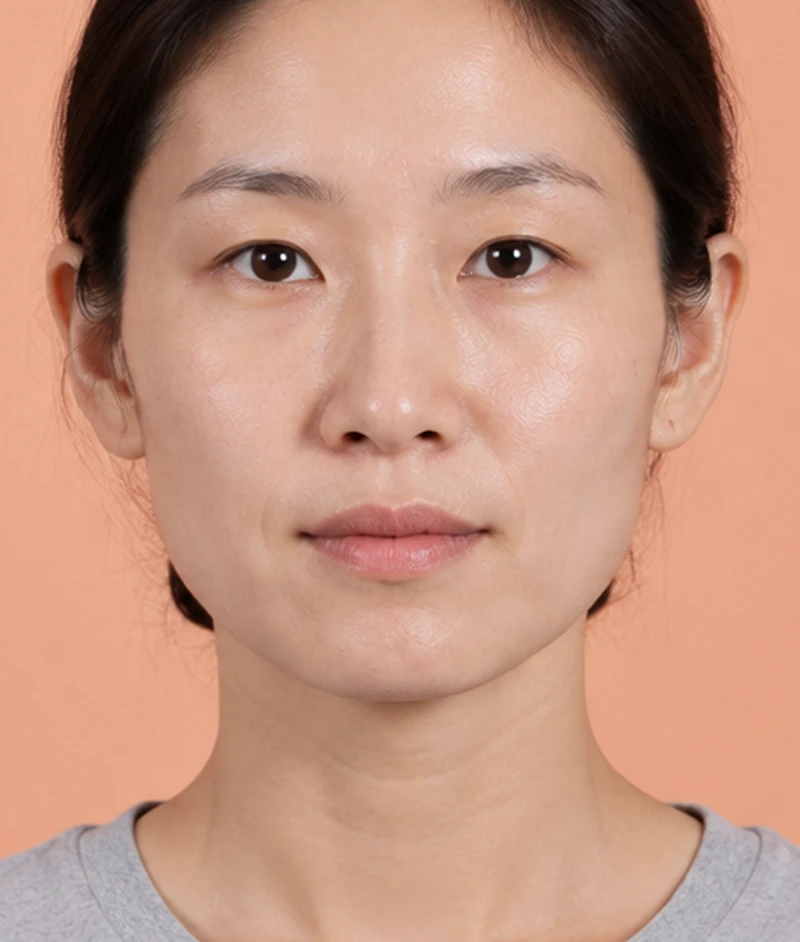 Before
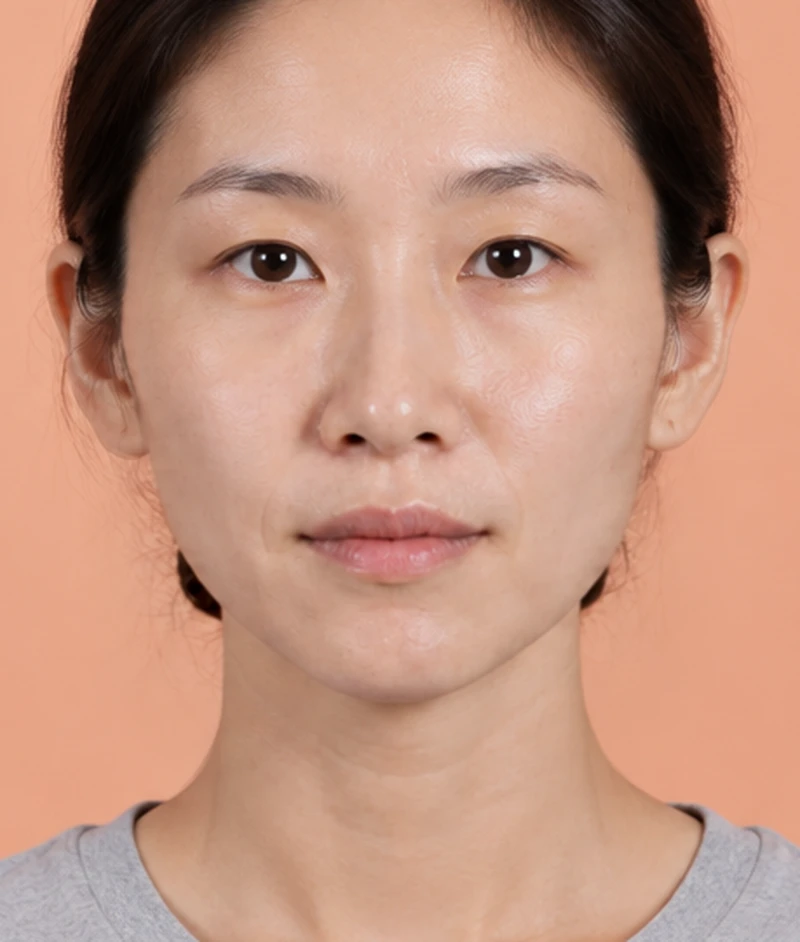 About 3 months later
Jaw: the face shape changes only once the muscle actually shrinks, so masseter botox shows later than wrinkle botox. A study measuring bite force found that it dropped at three months and returned to baseline by six months, but noted that the visible change in face shape can last longer than that. Do not judge jaw botox results in the first week or two.
How long botox lasts varies with the size and strength of the muscle, the dose, habits such as clenching, and metabolism. As the nerve gradually forms new connections, muscle strength returns and the effect fades over months, which is why people come back at intervals to keep the look they want.
 WhatsApp
 LINE
 KakaoTalk
DR.BAQUO's Answers on Masseter and Wrinkle Botox
These are the answers Dr. Park Hwonham, Medical Director of Kondae PPEUM Clinic, gave in his October 2026 review to the questions patients ask most often about botox.
I got jaw botox, but my jawline barely changed. Why?
"Jaw botox weakens the jaw muscle and reduces its volume to improve the face shape. But if your face looks wide mainly because of the jawbone line rather than the jaw muscle, you may feel there is little change even after the injections."
Will botox smooth out all my forehead lines and crow's feet?
"Botox is less about 'ironing out' wrinkles and more about reducing muscle movement so that the lines formed as the skin folds do not get deeper. To improve wrinkles that have already formed, other treatments are worth combining with it."
My botox seems to wear off faster than before. Have I built up resistance?
"Many doctors consider the clinical data on resistance not meaningful, so this is still open to debate. That said, most people who get it regularly do feel the effect."
My eyes feel heavy or my brows look odd after forehead or frown-line botox. What should I do?
"Botulinum toxin spreads well to the nerve endings inside a muscle, so it can take the strength out of the whole muscle evenly. But as movement in that area decreases, some people feel their eyes are heavy or stuffy, or that the way their brows lift looks awkward. In that case, go back to the clinic that treated you and make expressions so only the areas that need it can be retouched. To keep the result you want, I recommend staying with one clinic and getting treated there consistently."
How Botox Works
- Blocking the signal: a muscle moves only when it receives a signalling substance (acetylcholine) released from the nerve ending. Botulinum toxin stops this signal from being released.
- Relaxing the muscle: without the signal, the muscle loses strength. The effect begins one to two days after injection and grows over the first week.
- Gradual recovery: over time the nerve forms new connections and the muscle's strength returns, so the effect wears off after a few months.
"Botox" is really one company's brand, but in Korea, as in the US, people use it for every botulinum toxin injection. When the same toxin is injected thinly into the shallow skin layer (the dermis) instead of the muscle, it is called skin botox. It does not relax muscles; it targets oil, pores, fine lines and texture, so the purpose is different (see our skin booster guide).
Forehead and Frown-Line Botox as Prevention
Many people who come for masseter botox also ask about wrinkle botox. It works mainly on dynamic lines, the ones that crease when you make an expression. By reducing muscle movement, the skin stops folding repeatedly in the same place, so the lines do not get deeper. That is why it is often thought of as prevention rather than correction.
| Area | Muscle that makes the line | Watch out for |
|---|---|---|
| Frown lines (the "11" between the brows) | Corrugator and procerus | If it spreads near the muscle that lifts the eyelid, the eyelid can droop |
| Forehead (horizontal lines) | Frontalis | The frontalis lifts the brows, so too much relaxation can drop the brows and make the eyes look heavy |
| Crow's feet (lines at the eye corners when smiling) | Orbicularis oculi | Injecting too low can make the smile look unnatural |
Lines that are deeply etched even at rest may not smooth out right away when the muscle relaxes. In studies, improvement of lines at rest was smaller than improvement when frowning. For lines that have already formed, other treatments are considered alongside botox. Our guides to forehead wrinkle treatment and crow's feet treatment in Korea cover those options.
Korean Botox Brands: Nabota vs Botox, Botulax, Coretox and Xeomin
When people search for Korean botox, they usually mean one of two things: botox done in Korea, or Korean-made toxins such as Nabota, Botulax and Coretox. These are the products most used in Korea, summarised from MFDS approval information (checked on Drug Safety Nara in October 2026). Approved uses can change.
| Product | Company (country) | Cosmetic uses approved in Korea | Notes |
|---|---|---|---|
| Botox | Allergan (USA) | Frown lines | Used the longest, with the most studies |
| Xeomin | Merz (Germany) | Frown lines, crow's feet, forehead lines | 150 kDa product without complexing proteins |
| Nabota | Daewoong (Korea) | Frown lines, crow's feet, benign masseter hypertrophy | Similar efficacy and safety to Botox in comparison studies |
| Botulax | Hugel (Korea) | Frown lines, crow's feet | Effect started at a median of three days in an overseas phase 3 study |
| Coretox | Medytox (Korea) | Frown lines | 150 kDa product without complexing proteins |
Nabota vs Botox: what the studies show
In a study of 268 people with frown lines, Nabota's improvement rate at week 4 was 93.9%, not inferior to Botox (88.6%). In a study of 381 people, Xeomin's response rate at week 4 was 96.4%, similar to Botox (95.7%). Across comparisons of Korean and imported products, improvement of frown lines and adverse reactions were broadly similar. So the question is less "which one works" and more "which product will the clinic use for my area, and why".
- Units cannot be converted between products. Toxin content differs between products, so units of one cannot be converted into units of another. Comparing products by "how many units" alone does not work.
- Products without complexing proteins (150 kDa products such as Xeomin and Coretox) are popular with people who want to reduce resistance worries.
- Some uses are off-label. Of the products above, Nabota had approval for the jaw (benign masseter hypertrophy); other areas or products are sometimes used off-label at the doctor's judgement. Ask which product will be used, and why.
Botox Resistance and How Often You Can Get Botox
How often: the approval information does not recommend frequent injections because their safety has not been confirmed, and Xeomin's states that treatments should be at least three months apart. Usually, once you feel the effect starting to fade, you decide the timing of the next session with your doctor.
Resistance: with repeated injections, some people's bodies make neutralising antibodies against the toxin, so the effect weakens. This is what people usually mean by botox resistance.
- A meta-analysis of 43 studies (8,833 people) found a neutralising antibody rate of about 1.8% overall. Most of these were medical-treatment studies using far higher doses than cosmetic use; the rate rose with longer treatment and differed between products.
- A review of cosmetic use named these risk factors: intervals shorter than three months, high total doses, top-up injections within three weeks of the first, and impurities such as complexing proteins in the product.
- The same review reported no neutralising antibodies with products free of complexing proteins, though the evidence is not yet sufficient.
How much resistance matters at small cosmetic doses is debated among doctors, and most people who get botox regularly keep feeling the effect. A weaker effect does not always mean resistance: the dose, the interval, how the product was stored and injected, or changes in the muscle can all play a part. It is worth reviewing your records with the clinic that treated you. We go into this further in why botox can seem to stop working.
Getting Botox in Korea on a Trip
Botox fits a short visit better than most treatments, but plan around the result window, not just recovery. Kondae PPEUM Clinic is directly connected to Konkuk Univ. Station Exit 1, which makes a return visit during your stay easier.
- One session per trip. Sessions are not repeated at intervals shorter than three months, and a quick extra top-up within the first few weeks is named as a resistance risk factor.
- Daily life: most people go about their day right away. Swelling, redness or a small bruise at the injection points usually settles within a few days. Clinics commonly advise not rubbing or pressing the area hard and avoiding a sauna or heavy drinking on the day; follow the aftercare you are given.
- Leave room for a check. Wrinkle botox settles over one to two weeks, which is when heavy eyes or an odd brow shape would show. Getting botox early in your trip leaves time to go back for an adjustment.
- Jaw botox shows after you are home. The masseter starts to shrink from two to four weeks and the change is clear around three months.
- Bring the record home. Ask for the product, the number of units and the areas in writing, since units cannot be converted between products.
For booking, payment and what to bring, see our first-time Korean clinic guide.
How to Choose a Botox Clinic in Seoul
- Which product, and why? A Korean toxin, an imported one, or a 150 kDa product without complexing proteins, and whether it is approved for that area or used off-label.
- Do they assess your face first? For the jaw, you should be asked to clench so the doctor can check whether the width is muscle, bone or fat. For the forehead, they should look at how your brows and eyelids move.
- Do they start conservatively? Botox cannot be reversed once injected, so starting with a smaller dose and adjusting depth and position by area is important.
- Will they keep and share records? Product, units and areas, written down for you to take home.
- Can you come back if something needs adjusting? A retouch is easiest at a clinic that has your record.
Botox Side Effects and Who Should Wait
- Common: swelling, redness or a small bruise at the injection site, headache, puffiness around the eyes; mostly settle within a few days. In a post-marketing survey of Nabota for frown lines (914 people), related adverse reactions were 1.6% and headache 0.5%.
- Wrinkle areas: drooping eyelid (5.4% in a frown-line study, mostly mild), a heavy forehead or dropped brows, only the outer brows arching up (the "Mephisto sign", often called "Spock brows"), eyelid swelling.
- Jaw: discomfort when chewing, a change in expression when smiling, cheekbones and jaw angle standing out relatively more.
- Rare: the approval information warns that the toxin can spread beyond the injection site and cause muscle weakness, difficulty swallowing or difficulty speaking. If breathing or swallowing becomes hard, or your speech becomes slurred, get medical care right away, wherever you are.
- Tell the clinic first if you are pregnant or might be, are breastfeeding, have a nerve or muscle disease such as myasthenia gravis, have inflammation or an infection where the injection would go, take muscle relaxants or certain antibiotics (such as aminoglycosides), or recently had botox elsewhere. Botox is not given during pregnancy or breastfeeding or with neuromuscular disease.
Most of these improve as the muscle's strength returns. If your eyes feel heavy or your brows look awkward, go back to the clinic that treated you so only the areas that need it can be adjusted.
Masseter Botox Price in Korea
Standing prices at Kondae PPEUM Clinic (promotional event prices are not listed here; prices are subject to change):
| Treatment | Price |
|---|---|
| Domestic jaw botox 50U | KRW 35,000 |
| Domestic premium masseter botox 50U | KRW 59,000 |
| Imported German jaw botox 50U | KRW 120,000 |
| Imported US masseter botox 50U | KRW 150,000 |
| Domestic wrinkle botox, 1 area | KRW 29,000 |
| Domestic premium wrinkle botox, 1 area | KRW 39,000 |
| Imported German wrinkle botox, 1 area | KRW 49,000 |
| Imported US wrinkle botox, 1 area | KRW 80,000 |
Botox events in Korea
Kondae PPEUM Clinic regularly updates its events and packages, including first-visit prices and bundles with other treatments. The prices above are standing prices. For the latest Botox event prices and conditions, check the packages page.
See current events →When comparing clinics, line up the same conditions: which product, how many units (remembering that units cannot be compared directly between different products), which areas, a single session or a package, and how top-ups are handled if the effect seems weak. Rather than choosing on price alone, make sure you receive a written record of the product, dose and areas.
FAQ — Masseter Botox and Korean Botox
Q: Is Korean botox safe compared with Botox or Xeomin?
A: In comparison studies, Korean products such as Nabota and Botulax showed broadly similar efficacy and adverse reactions to Botox and Xeomin for frown lines. Side effects depend more on the dose, the injection position and your own muscles than on the country of manufacture.
Q: How long does masseter botox last?
A: It is often described as about four to six months, with big differences between people. Bite force returned to baseline by six months in one study, but the visible change in face shape can last longer, and repeat sessions can extend it.
Q: When will I see my jaw botox results?
A: The muscle usually starts to shrink after two to four weeks, and the change is clear around three months. Right after the injection the face shape looks the same, so judge the result later rather than before your flight home.
Q: If I stop botox, will my wrinkles or face get worse?
A: As the effect wears off, the muscle's strength returns and you gradually go back to how you were before. Botox does not leave you worse than before, but the natural changes of ageing continue in the meantime.
Q: Is botox the same as skin botox?
A: They use the same botulinum toxin, but botox goes into the muscle to treat wrinkles and the jaw muscle, while skin botox is injected thinly into the shallow skin layer for oil, pores and texture.
Q: Can I get botox on the same day as Ultherapy or Shurink?
A: They are often done on the same day. In that case the device treatment usually comes first and the injections afterwards. See our Ultherapy in Seoul guide.
Q: Can I get a top-up if my botox feels weak?
A: Talk to the clinic that treated you first. Top-up injections within three weeks of the first and intervals shorter than three months are named as resistance risk factors, so the timing and criteria matter. A weaker effect can also come from the dose, product or muscle changes.

Related Before & After Cases and Guides
- Forehead Filler Korea Before and After: Real Seoul Case
- Juvelook Volume Before and After: Nasolabial Fold Case in Korea
- Nose Filler Before and After Korea — Barbie Nose Filler Results at Kondae PPEUM Clinic
- Botox in Korea : Price Guide and Why Your Jawline Needs a Salivary Gland Check
- Forehead Wrinkle Treatment Korea: Dr. Baquo's Real Guide
- Before & After gallery (members)
Sources
- Korea Ministry of Food and Drug Safety (MFDS), Drug Safety Nara. Botox Inj. approval information. nedrug.mfds.go.kr
- MFDS, Drug Safety Nara. Xeomin Inj. approval information. nedrug.mfds.go.kr
- MFDS, Drug Safety Nara. Nabota Inj. approval information. nedrug.mfds.go.kr
- MFDS, Drug Safety Nara. Botulax Inj. approval information. nedrug.mfds.go.kr
- MFDS, Drug Safety Nara. Coretox Inj. approval information. nedrug.mfds.go.kr
Show 9 more sources
- Carruthers JA et al. Botulinum toxin type A in the treatment of glabellar lines. J Am Acad Dermatol, 2002. PubMed 12063480
- Mueller DS et al. Letibotulinumtoxin A in the Treatment of Glabellar Lines, Phase 3 Study. Aesthet Surg J, 2022. PubMed 35092418
- Won CH et al. Comparative trial of a novel botulinum neurotoxin type A versus onabotulinumtoxinA for glabellar lines. Int J Dermatol, 2015. PubMed 25311357
- Sattler G et al. Noninferiority of incobotulinumtoxinA in the treatment of glabellar frown lines. Dermatol Surg, 2010. PubMed 21134045
- Kim NH et al. The use of botulinum toxin type A in aesthetic mandibular contouring. Plast Reconstr Surg, 2005. PubMed 15731696
- Ågren M et al. Duration of bite force reduction following a single injection of botulinum toxin in the masseter muscle. J Oral Rehabil, 2023. PubMed 36810787
- Shome D et al. Botulinum Toxin in Masseter Hypertrophy — A 4-Year Follow-Up Study. Plast Reconstr Surg, 2019. PubMed 31461011
- Rahman E et al. Immunogenicity to Botulinum Toxin Type A — A Systematic Review With Meta-Analysis. Aesthet Surg J, 2022. PubMed 33528495
- Kroumpouzos G, Silikovich F. Exploring Nonresponse to Botulinum Toxin in Aesthetics. JMIR Dermatol, 2025. PubMed 40273416
This is a treatment guide for general information and does not replace an in-person consultation. Results vary between individuals. Doctor's answers: Dr. Park Hwonham, Medical Director, Kondae PPEUM Clinic, from his review in October 2026.
DR.BAQUO | Hanlim Tower 2F, 229 Achasan-ro, Gwangjin-gu, Seoul | Konkuk University Station Exit 1 (Line 2) | Google Maps | LINE: @364kbfyj | global.drbaquo.com
VISIT
Kondae PPEUM Clinic
Dr. Park Hwonham (DR.BAQUO), Medical Director
- Address
- Hanlim Tower 2F, 229 Achasan-ro, Gwangjin-gu, Seoul
- Subway
- Line 2 Konkuk Univ. Station Exit 1 (directly connected)
- Hours
- Mon–Fri 10:00–20:30 · Sat 10:00–16:30 (KST)
 WhatsApp
 LINE

 WhatsApp
 LINE
 WeChat
 Instagram
 YouTube
 TikTok
 KakaoTalk

