
Juvelook Volume before and after results are among the most frequently requested comparisons at DR.BAQUO — and for good reason. Patients seeking a gradual, collagen-stimulating approach to nasolabial folds are increasingly turning to this PDLLA + hyaluronic acid treatment as an alternative to traditional volume fillers. In this post, we walk through a real case from our clinic, explain exactly what changed and why, and set honest expectations for anyone considering Juvelook Volume in Seoul or Korea.
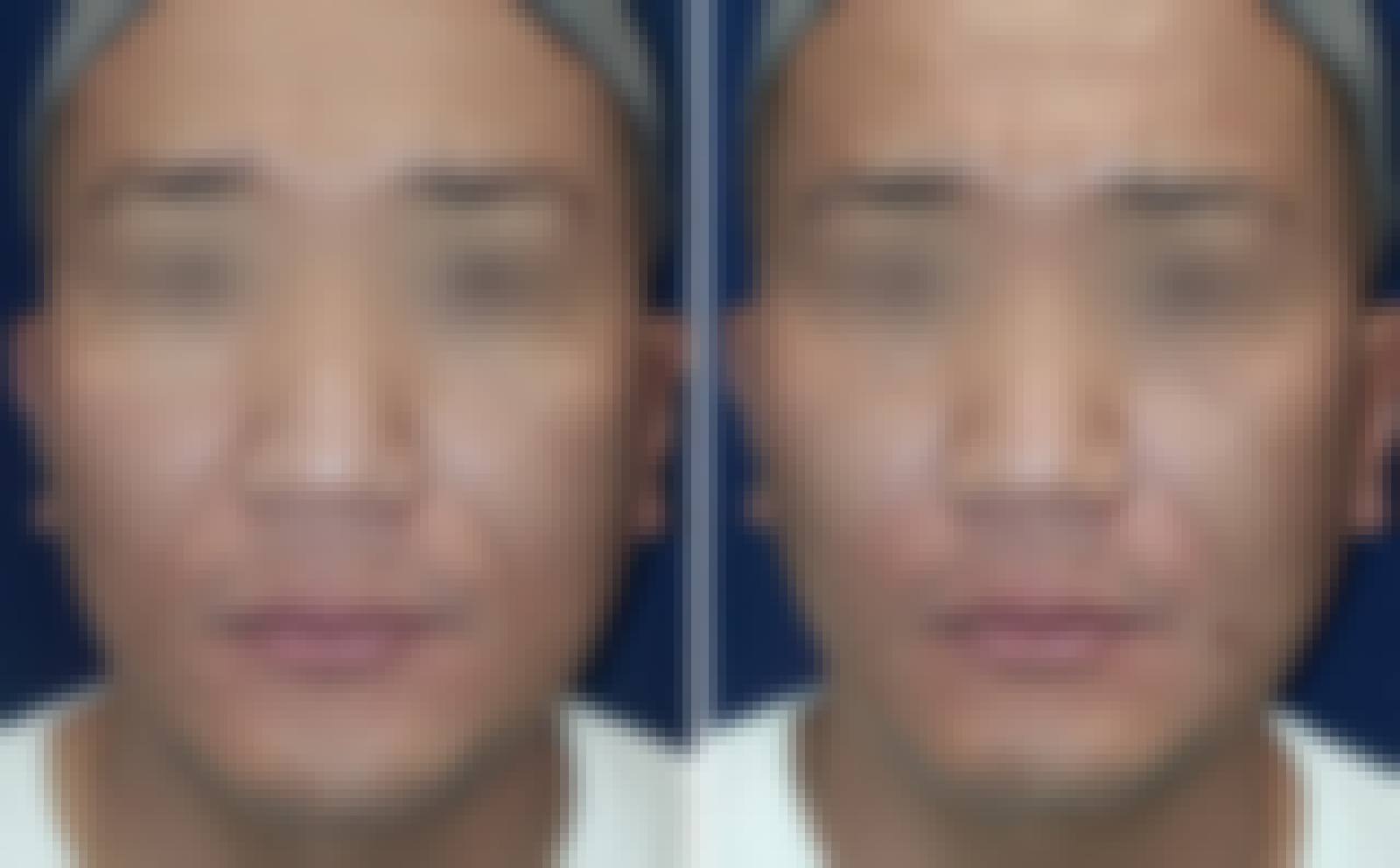
Quick Answer: The before and after photograph shown in this post documents visible softening of the nasolabial fold area following Juvelook Volume treatment at DR.BAQUO. The improvement visible in the image reflects gradual collagen stimulation rather than immediate volume displacement. Outcomes vary between individuals depending on skin condition, treatment plan, and biological response — the photograph represents one case and cannot predict any other patient’s result.
What Is Juvelook Volume? — How a PDLLA Collagen Stimulator Works
Juvelook Volume is an injectable treatment that combines poly-D,L-lactic acid (PDLLA) microspheres with hyaluronic acid to stimulate the skin’s own collagen-producing process over time. Unlike a conventional hyaluronic acid filler — which works primarily by adding immediate physical volume — Juvelook Volume works through a fundamentally different mechanism: the PDLLA component acts as a collagen biostimulator, gradually encouraging fibroblast activity and new collagen synthesis in the treated area.
The PDLLA + HA Combination
The hyaluronic acid component in the formula serves a dual purpose: it acts as a carrier medium for the PDLLA microspheres during injection, and it provides some immediate hydration to the surrounding tissue. The PDLLA itself, once injected, begins a slow biodegradation process that triggers a controlled inflammatory response — signaling the body to produce new collagen in and around the treatment site. This is why patients considering Juvelook Volume before and after results need to understand that the most meaningful changes are not visible immediately after the session. The skin gradually remodels over weeks and months as new collagen forms.
Why This Produces Visible Before/After Differences
The collagen stimulation mechanism is precisely why Juvelook Volume before and after comparisons look different from a hyaluronic acid filler comparison. With a standard filler, before-and-after photos taken one week apart may already show significant volume change. With Juvelook Volume, the most meaningful improvements typically develop gradually. Patients often observe early changes within the first several weeks, with the results continuing to mature as collagen production progresses. General guidance in the aesthetic medicine field suggests that collagen-stimulating treatments tend to show progressive improvement over a period of months — the exact timeline for this particular patient is not recorded in the source material.
Safety Profile and Regulatory Context
As with any injectable procedure, Juvelook Volume carries risks that should be discussed thoroughly before treatment. The U.S. FDA’s dermal filler safety information identifies general risks associated with soft tissue fillers, including swelling, bruising, redness, infection, nodule formation, and — in rare but serious cases — vascular events. While this product is not the subject of a specific FDA approval claim in this post, the general risk categories identified by the FDA apply to injectable aesthetic procedures broadly. All equipment and materials used at DR.BAQUO are MFDS-certified, with certification documentation available for patient review. A systematic review of adverse events in nonsurgical facial procedures (PubMed, PMID 41047572) further underscores the importance of thorough pre-treatment assessment and injector expertise in minimizing complication risk.
 WhatsApp
 LINE
 KakaoTalk
Juvelook Volume Before and After — Nasolabial Fold Case Analysis
The case documented in this post involves Juvelook Volume treatment targeting the nasolabial fold area. The source record confirms the treatment area and product used; it does not specify the patient’s age, the amount injected, the number of sessions, or the interval between the before and after photographs. All clinical observations below are limited strictly to what is visually apparent in the supplied photographs.
What the Before Photograph Shows
In the before image, the nasolabial folds — the lines running from the sides of the nose down toward the corners of the mouth — are visible as defined creases with moderate depth. The skin in the mid-face and fold region appears to follow a contour that creates a notable shadow along the fold line, contributing to the appearance of facial tiredness or volume loss in the medial cheek area. The skin surface texture in the pre-treatment image appears relatively consistent across the fold region.
What the After Photograph Shows
In the after image, the nasolabial fold region appears noticeably softer. The crease that created a defined shadow in the before image is less pronounced, and the transition between the cheek and the fold appears more gradual. The overall mid-face contour reads as subtly fuller and more even, which is consistent with what collagen stimulation and tissue remodeling can produce over time. The skin surface in the fold area also appears smoother in character.
It is important to note meaningful limitations in photographic comparison: lighting conditions, camera distance, patient expression, and head position can all influence how folds appear in two-dimensional images. Both photographs appear to be taken under relatively consistent conditions with a neutral expression, which supports a reasonable comparison — but no photographic comparison can fully control for all variables.
What Makes This Case Clinically Interesting
What makes this Juvelook Volume before and after case particularly instructive is the nature of the improvement: it does not appear as a sudden, overfilled look. The softening is proportional and naturalistic, which is consistent with a collagen-stimulating mechanism rather than immediate volume augmentation. Patients typically notice this kind of gradual improvement as a refreshed appearance rather than a treated one — which is precisely what many patients seeking natural results are looking for.
For additional reference cases across a range of treatments, you can browse DR.BAQUO’s full before and after gallery.
What Makes These Results Possible at DR.BAQUO
The quality of a Juvelook Volume result is not determined by the product alone — injection technique, placement depth, treatment planning, and the injector’s anatomical knowledge are equally critical factors. At DR.BAQUO, Dr. Park performs both the consultation and the treatment personally. Every injection is administered by the doctor’s own hand — not delegated to a nurse or technician. This single-physician approach means the person assessing your face is the same person treating it, which matters significantly for nuanced treatments like Juvelook Volume where the injection plane and distribution pattern directly affect how collagen remodeling occurs.
Technique Considerations for Nasolabial Fold Treatment
The nasolabial fold is one of the more technically demanding facial zones to treat with a collagen biostimulator. The area sits at the intersection of several dynamic facial muscles, meaning product placement must account for movement patterns, not just static anatomy. For Juvelook Volume in the nasolabial fold area, the goal is typically to deliver the PDLLA microspheres into the appropriate tissue plane so that the subsequent collagen response reinforces the mid-face support structure rather than creating surface irregularities.
Why Results Vary Between Patients
Collagen stimulation is a biological process, and biological processes vary. Factors such as baseline skin thickness, existing collagen density, overall skin health, age-related tissue changes, and individual healing responses all influence the outcome of a treatment like Juvelook Volume. This is why the case shown here cannot be used as a guarantee or prediction of results for another patient. What it does illustrate is the type and quality of result that is achievable when the treatment is planned and executed with care.
Combination Approaches
Some patients at DR.BAQUO achieve enhanced outcomes when Juvelook Volume is combined thoughtfully with complementary treatments as part of a broader plan. For those exploring the full landscape of collagen-stimulating injectables, our post on Gouri before and after results offers a comparison with Gouri, a liquid polycaprolactone (PCL) collagen stimulator. For patients interested in the hydration and skin quality dimension alongside structural improvement, the DR.BAQUO Skin Booster overview explains how those treatments integrate with a collagen-stimulating protocol. Our Signature Program also combines multiple evidence-based approaches for patients seeking comprehensive facial rejuvenation.
Recovery and What to Expect — A Realistic Timeline
One of the most important things to understand about Juvelook Volume before and after results is that the timeline is fundamentally different from a conventional filler. There is no dramatic “before and after one week” moment with this treatment. The recovery experience and the results timeline are both gradual, and setting honest expectations is part of responsible aesthetic medicine.
Immediate Post-Treatment Period
General guidance for injectable collagen biostimulators — applicable as broad context, not as this specific patient’s experience, since the source record does not detail their recovery — typically includes some degree of swelling, redness, or tenderness at the injection sites in the first day or two following treatment. Bruising is possible depending on individual factors and the specific injection technique used. These immediate post-treatment signs are generally short-lived, though individual experiences vary.
The Collagen-Building Phase
The most important phase for Juvelook Volume is not the first week — it is the weeks and months that follow. As the PDLLA microspheres begin to biodegrade, the collagen stimulation process activates. General information in the field of collagen-stimulating injectables describes a gradual improvement arc, with patients beginning to notice meaningful changes typically after the first several weeks, and results continuing to develop and refine over subsequent months. The source record for this case does not specify the exact interval between before and after photographs.
Before and After Care
At DR.BAQUO, patients receive detailed aftercare guidance tailored to their specific treatment. General post-injectable care for the nasolabial fold area typically includes avoiding intense sun exposure, refraining from aggressive facial massage in the treated zone in the immediate post-treatment period, and staying hydrated to support the healing process. For international patients, post-treatment follow-up is available via LINE, so questions that arise after returning home can be addressed directly.
When to Expect Peak Results
General guidance in aesthetic medicine suggests that the results of PDLLA-based collagen stimulators continue to develop over a period of months. The exact peak result timeline varies by individual. The photographs in this post document the visible outcome for this specific patient at the time they were taken — the source record does not specify how much time had elapsed between treatment and the after photograph.
Who Is a Good Candidate for Juvelook Volume?
Juvelook Volume is generally well-suited to patients who prefer a gradual, natural-looking improvement over immediate dramatic volume change. It addresses concerns related to mid-face volume loss, nasolabial fold depth, and skin quality in the treated area — not through physical displacement of tissue but through biological collagen regeneration.
Ideal Patient Profile
Patients who tend to be well-suited for Juvelook Volume nasolabial fold treatment typically include:
- Those with mild to moderate nasolabial fold depth who are seeking natural-looking softening
- Patients who have experienced gradual volume loss over time and want to restore collagen density rather than add filler volume
- Individuals who are comfortable with a gradual results timeline and understand that this is not an instant-result treatment
- Patients who have realistic expectations and are interested in skin quality improvement alongside structural change
- Those who prefer a treatment with a collagen-stimulating mechanism over repeated hyaluronic acid filler maintenance
When to Consider Alternatives
For patients seeking immediate, same-day visible volume correction in the nasolabial fold area, a conventional hyaluronic acid filler may be a more appropriate starting point. Our post on nasolabial fold filler treatment in Korea provides detailed information on that approach. Patients with very deep nasolabial folds or significant structural volume loss may also benefit from a combination plan that incorporates both a collagen biostimulator and a conventional filler. Patients with known hypersensitivity to any component of Juvelook Volume, those who are pregnant or breastfeeding, or those with active skin infections in the treatment area are generally not candidates — a thorough consultation is essential to determine individual suitability.
Extra Caution — Nodule Risk
Nodule formation is a recognized potential adverse event with PDLLA-based injectable treatments. It is among the risks listed in peer-reviewed safety literature, including the systematic review of nonsurgical facial procedure adverse events referenced at the end of this post. At DR.BAQUO, injection technique is selected with this risk in mind, but it cannot be entirely eliminated for every patient. Discussing your personal risk factors during consultation is an important step.
International Patient Considerations
DR.BAQUO is located directly at Konkuk University Station Exit 1 on Seoul Metro Line 2, making it straightforward to reach from central Seoul. Multilingual staff — fluent in Chinese, Japanese, and English — ensure clear communication for international patients throughout the consultation, treatment, and aftercare process. Post-treatment follow-up via LINE means that patients who return home after treatment can still ask questions and share progress photos with the clinic team.

FAQ — Juvelook Volume Before and After Questions
Q: What exactly does the Juvelook Volume before and after photograph at DR.BAQUO show?
A: The photograph shows one patient’s nasolabial fold area before and after Juvelook Volume treatment at DR.BAQUO. The after image shows visible softening of the nasolabial fold crease and a smoother mid-face contour compared to the before image. The source record does not specify the amount injected, the number of sessions, or the interval between photographs. Outcomes vary between individuals — this photograph represents one case and cannot predict results for other patients.
Q: How is Juvelook Volume different from a regular filler for nasolabial folds?
A: A regular hyaluronic acid filler corrects nasolabial fold depth primarily by physically adding volume to the area — results are visible almost immediately. Juvelook Volume works differently: the PDLLA component stimulates your own collagen production over time, creating a gradual structural improvement. This means the result timeline is longer, but the outcome tends to look more naturalistic. For a comparison of filler-based approaches to nasolabial folds, see our nasolabial fold filler Korea article.
Q: How does Juvelook Volume compare to Gouri or Sculptra?
A: All three — Juvelook Volume, Gouri, and Sculptra — are collagen biostimulators, but their active ingredients differ. Juvelook Volume uses PDLLA (poly-D,L-lactic acid) combined with hyaluronic acid, Sculptra uses PLLA (poly-L-lactic acid), and Gouri uses liquid polycaprolactone (PCL). Our Gouri before and after post explores that treatment in detail. The best choice between them depends on individual anatomy, skin condition, and treatment goals — a consultation is the appropriate way to determine which is most suitable for you specifically.
Q: What are the risks of Juvelook Volume treatment?
A: As with all injectable aesthetic treatments, Juvelook Volume carries risks. These include swelling, bruising, redness, tenderness, infection, and nodule formation. The U.S. FDA’s dermal filler safety information outlines general risk categories for injectable soft tissue products. A systematic review of adverse events in nonsurgical facial procedures (PMID 41047572) identifies nodule formation as a recognized risk with PDLLA-type biostimulators. Serious vascular complications, while rare, are a known risk category for any facial injectable. At DR.BAQUO, Dr. Park performs all injections personally, and pre-treatment consultation includes a full discussion of individual risk factors.
Q: How much does Juvelook Volume cost in Korea / Seoul?
A: DR.BAQUO’s published first-visit price for Juvelook Volume is 1cc for KRW 49,000, as listed on global.drbaquo.com — please note this is a first-visit promotional price that may change. The total cost of treatment depends on the amount used, the number of sessions in your plan, and whether combination treatments are included. We do not quote a total cost without a consultation, because the appropriate treatment volume and session frequency vary significantly between patients. Contact the clinic or book a consultation to receive a plan tailored to your specific situation.
Q: How many sessions of Juvelook Volume are needed to see results?
A: The source record for the case shown in this post does not specify the number of sessions. In aesthetic medicine generally, collagen biostimulators are often used across multiple sessions to achieve and maintain the desired effect — but the appropriate protocol varies by individual. Your treatment plan, including session frequency and total number of sessions, would be determined during consultation at DR.BAQUO based on your specific anatomy and goals.
Q: Is Juvelook Volume safe for the nasolabial fold area specifically?
A: The nasolabial fold area is a recognized treatment zone for injectable collagen biostimulators. The safety of any injectable in any facial area depends significantly on injector skill, product selection, injection depth, and patient screening. At DR.BAQUO, all materials are MFDS-certified and displayed with visible certification. The systematic review of nonsurgical facial procedure adverse events referenced in our sources section provides peer-reviewed context for the risk profile of injectable procedures in general. As always, a pre-treatment consultation is essential to assess individual suitability.
Q: What should I know as an international patient considering Juvelook Volume in Seoul?
A: DR.BAQUO is accessible directly from Konkuk University Station Exit 1 on Line 2, making it easy to reach from most areas of Seoul. Consultations are available in Chinese, Japanese, and English through our multilingual staff. Post-treatment follow-up via LINE allows you to stay in contact with the clinic after returning home. We recommend international patients plan their treatment timing to allow for the immediate post-injection recovery period before travel, though the source record does not specify a recommended interval — this is discussed during consultation.
Related Before & After Cases and Guides
- Hollow Temples Treatment in Korea: Gouri & HILO WAVE Before and After
- Skin Booster Before and After Korea — Gouri + HILO WAVE Results
- Lip Filler Before and After Seoul — DR.BAQUO Results
- Cheek Filler Korea: Get Natural Volume in One Day
- Double Chin Treatment Korea: Seoul's Most Effective Fix
- Before & After gallery (members)
Sources and Medical References
The following verified sources were used to support risk and limitation statements in this article:
- U.S. FDA — Dermal Fillers (Soft Tissue Fillers) Safety Information
https://www.fda.gov/medical-devices/aesthetic-cosmetic-devices/dermal-fillers-soft-tissue-fillers
This source supports general risk statements regarding injectable soft tissue products, including swelling, bruising, infection, nodule formation, and vascular events described throughout this article.
- Systematic Review of Adverse Events in Nonsurgical Facial Procedures (PubMed PMID 41047572)
https://pubmed.ncbi.nlm.nih.gov/41047572/
This peer-reviewed systematic review supports statements about nodule formation as a recognized adverse event with PDLLA-based injectable biostimulators, and underscores the importance of injector expertise and patient screening in minimizing complication risk.
The treatment name (Juvelook Volume) and treatment area (nasolabial fold) referenced in the case analysis section are drawn directly from the source record provided by DR.BAQUO. No product, device, patient demographic, session count, dose, photo interval, or treatment date has been invented or assumed beyond what the source record confirms.
DR.BAQUO | Hanlim Tower 2F, 229 Achasan-ro, Gwangjin-gu, Seoul | Konkuk University Station Exit 1 (Line 2) | Google Maps | LINE: @364kbfyj | global.drbaquo.com
—
DR.BAQUO
Hanlim Tower 2F, 229 Achasan-ro, Gwangjin-gu, Seoul
Line 2 Konkuk University Station Exit 1 (direct connection)
 WhatsApp
 LINE

 WhatsApp
 LINE
 WeChat
 Instagram
 YouTube
 TikTok
 KakaoTalk

