
Laser hair removal fires light that is absorbed by the melanin (dark pigment) in hair. The heat damages the follicle that makes the hair, so less hair grows back. Shaving and waxing remove only the hair you can see. Laser targets the root where hair grows. If you are planning laser hair removal, perhaps during a trip to Seoul, check three things before you book. It is not a one-off, because you need several sessions a few weeks apart. It stings, though cooling and numbing cream help. By research and US FDA standards, it reduces hair for a long time rather than removing it completely. This guide covers each point using published research and society guidance. It also includes the answers of Dr. Park Hwonham, Medical Director of Kondae PPEUM Clinic and a surgeon trained at Seoul National University Hospital, from his clinical experience.
Laser hair removal at a glance
- Sessions: the AAD says most people need 2–6. In Dr. Park’s practice, people usually notice slower regrowth after 5–10 sessions
- Interval: usually every 4–6 weeks (about a month), so one trip to Seoul is usually one session
- Pain: many people describe a warm pinprick or a rubber band snapping against the skin. Cooling and numbing cream help
- Permanent? No. FDA “permanent hair reduction” means fewer hairs grow back for a long time, not none, and maintenance may be needed
- Who it suits less: people with blond, grey or white hair (it barely responds), and people with freshly tanned skin (they should wait)
- Main risks: redness and swelling for 1–3 days. Less often: burns, pigment changes, folliculitis, paradoxical hypertrichosis, and eye injury without eye protection
How many sessions of laser hair removal, and how often?
Society guidance and research use several sessions spaced about a month apart:
| Source | Number of sessions | Interval |
|---|---|---|
| American Academy of Dermatology (AAD) | Most people 2–6 | Usually every 4–6 weeks |
| American Society for Dermatologic Surgery (ASDS) | Several may be needed | Usually about a month apart |
| European Society for Laser Dermatology (ESLD) | At least 3 for partial long-term reduction | — |
| Dr. Park’s practice | 5–10 before people notice slower regrowth | About a month |
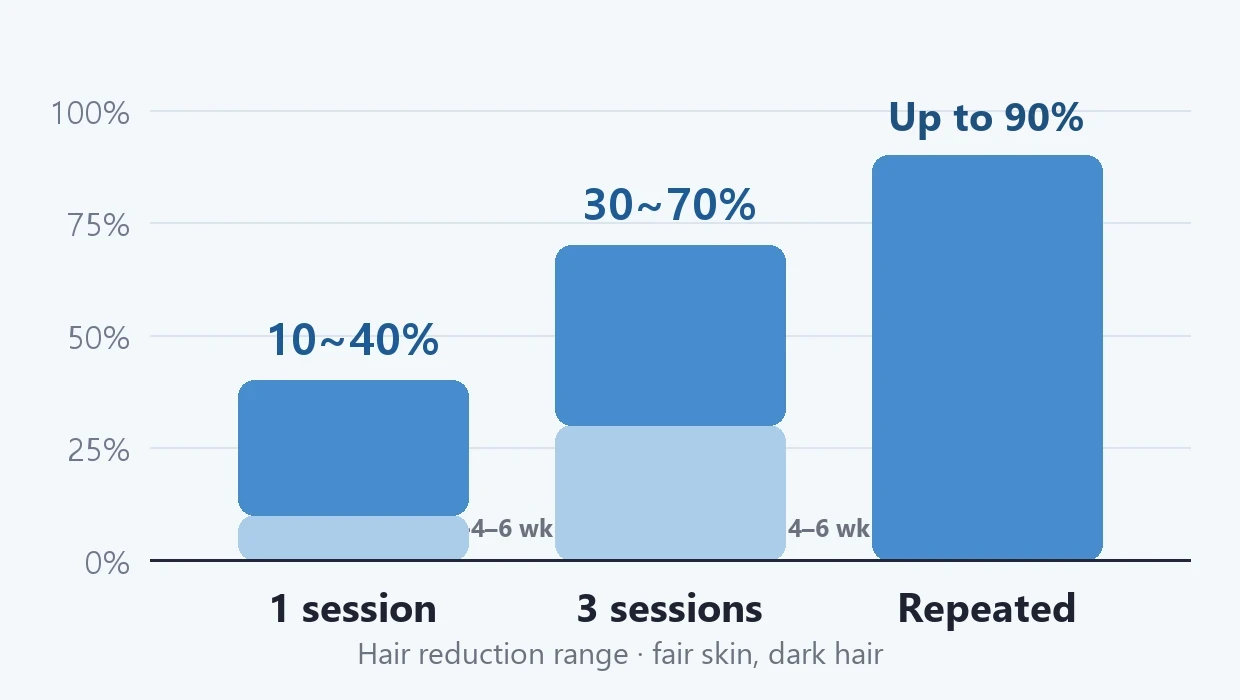
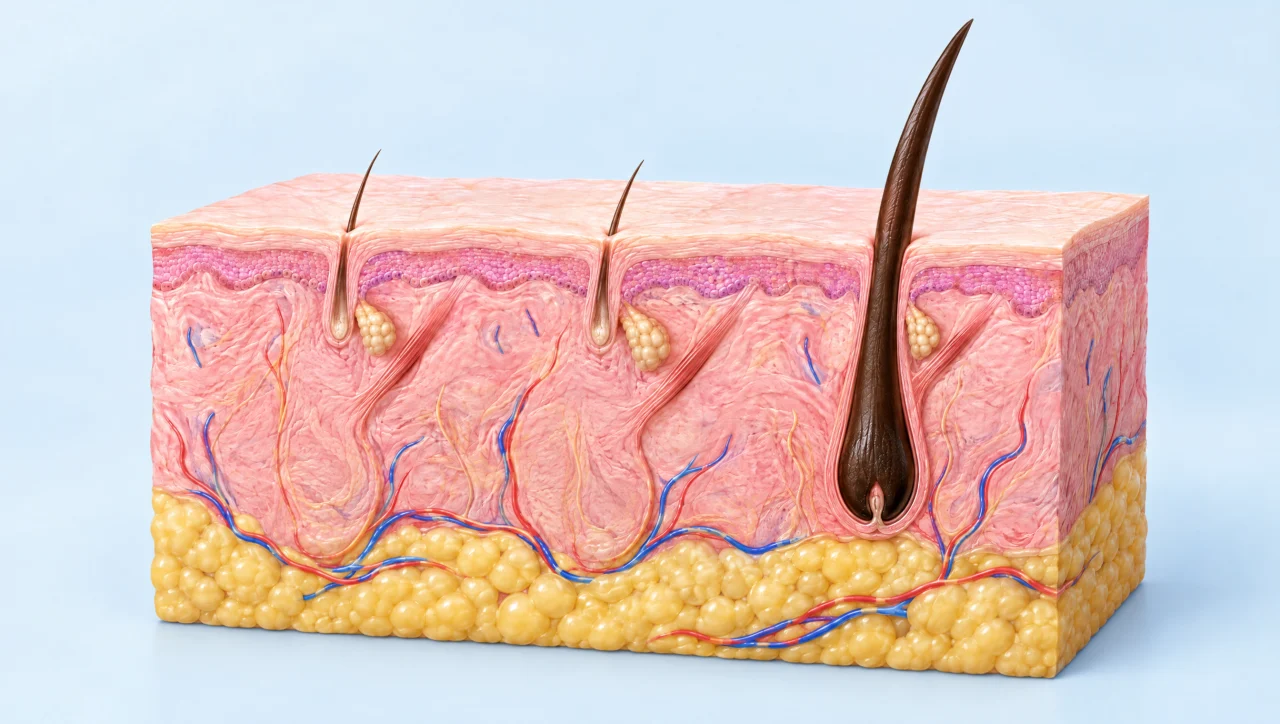
Hair cycles through three phases: growing (anagen), transition (catagen) and resting (telogen). At any moment, the hairs in one area are at different stages. A 2026 review said one session removes 15–30% of hairs, mainly those in the growing phase. The hairs that were resting have to be treated at later, spaced sessions once they start to grow. The effect also builds with repetition. One review reported results for fair skin with dark hair: hair was reduced by 10–40% after one session, 30–70% after three, and up to 90% with repeated sessions, with results maintained up to 12 months. These are figures for ideal cases, and results vary with skin, hair and area.
Can sessions be closer together than a month? Studies and guidance mostly used intervals of about a month. Set the interval with your doctor based on the area and how quickly your hair grows back. In Dr. Park’s experience, after 5–10 sessions about a month apart, people at least notice that their hair takes longer to grow back. Some people hope for a year or more with no hair and no shaving. That depends entirely on the person and the situation, and no one can promise it. The AAD also says people stay hair-free for months to years, but maintenance treatments may be needed.
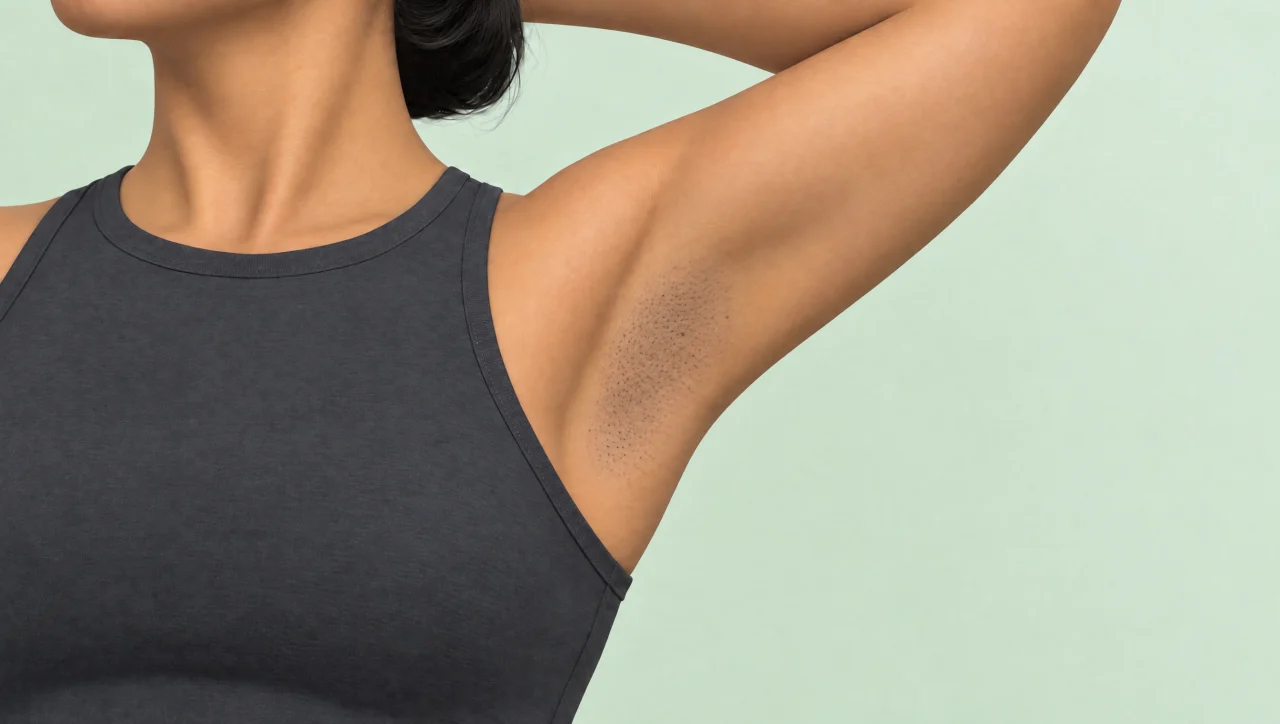
Laser hair removal underarms
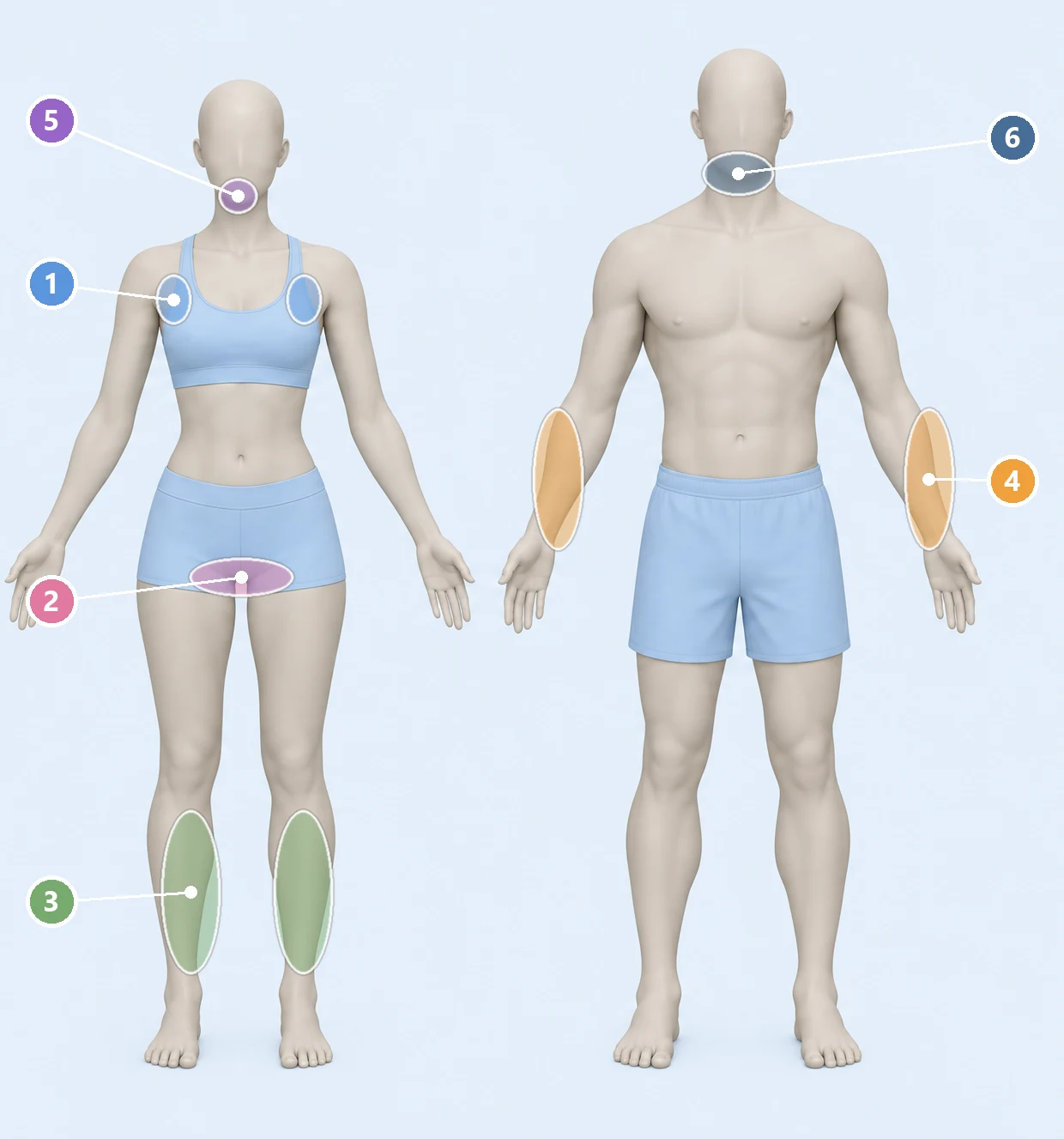
The underarm is one of the most studied areas, and its hair growth cycle is about seven months. One study compared three sessions of 805 nm diode laser on both underarms of 10 Korean adult women. Hair reduction at 3 months was 38.7% with a small spot size and 50.1% with a large spot size. The larger spot treated more skin per pulse and hurt more, and there were no serious adverse events. Hair coming back up in the underarms between sessions is, in Dr. Park’s words, nothing unusual. Those are resting hairs starting to grow, and they become the target of the next session.
Brazilian laser hair removal
The Brazilian area (bikini line and genital area) is one of the most requested areas. However, few studies measure it on its own, so there is no research-based session count for it. An adverse-events review says complications vary with skin type and area, so the strength is adjusted to the area. The general pattern still applies: several sessions about a month apart, with the number set at consultation.
Laser hair removal face
Facial hair (upper lip and chin) has the shortest growth cycle, about six months. A systematic review that followed people for at least one growth cycle found long-term reduction was greatest on the legs (about a one-year cycle) and smallest on the face. The face and neck are also where paradoxical hypertrichosis (hair increasing instead) mostly occurs, as described in the side effects section below.
Laser hair removal for men
The beard is a commonly treated area for men. Because it sits on the face and neck, the same points apply: a shorter growth cycle and a higher chance of paradoxical hypertrichosis than on the body. For beard shaping and other details for men, see our guide to laser hair removal in Seoul for men.
Does laser hair removal hurt?
Yes, it stings. The American Academy of Dermatology says many people describe a laser pulse as feeling like “a warm pinprick or a rubber band snapping against the skin”. How much it hurts depends on the device and settings. In the underarm study, treating a larger area per pulse hurt more. A review of adverse events also compared pain between devices:
| Device | Pain compared (review) |
|---|---|
| Diode | Relatively less |
| IPL | More than diode, less than alexandrite |
| Alexandrite | More than IPL |
| Nd:YAG | Highest |
- Cooling: the skin is cooled with contact cooling, cooling spray or ice packs. In a randomised underarm trial, an ice pack and a lidocaine–prilocaine numbing cream did not differ in pain reduction. Pain right after treatment was higher with the cream, and pain five minutes later was higher with ice.
- Numbing cream: the AAD says it takes 30–60 minutes to work. A systematic review of pain relief during laser procedures found that numbing cream, cooling and stretching the skin were better than nothing, but the level of evidence was low.
- Numbing-cream safety: in 2007 the FDA reported the deaths of two young women who used topical anaesthetics before laser hair removal. Its 2009 advisory warned that applying these creams over large areas, covering them with plastic wrap or applying heat can raise blood levels unpredictably. This can lead to irregular heartbeat, seizures, breathing difficulty, coma or death. Use only the amount and area the clinic tells you, and do not wrap cream in plastic at home before you come.
 WhatsApp
 LINE
 KakaoTalk
How laser hair removal works: only growing hairs respond
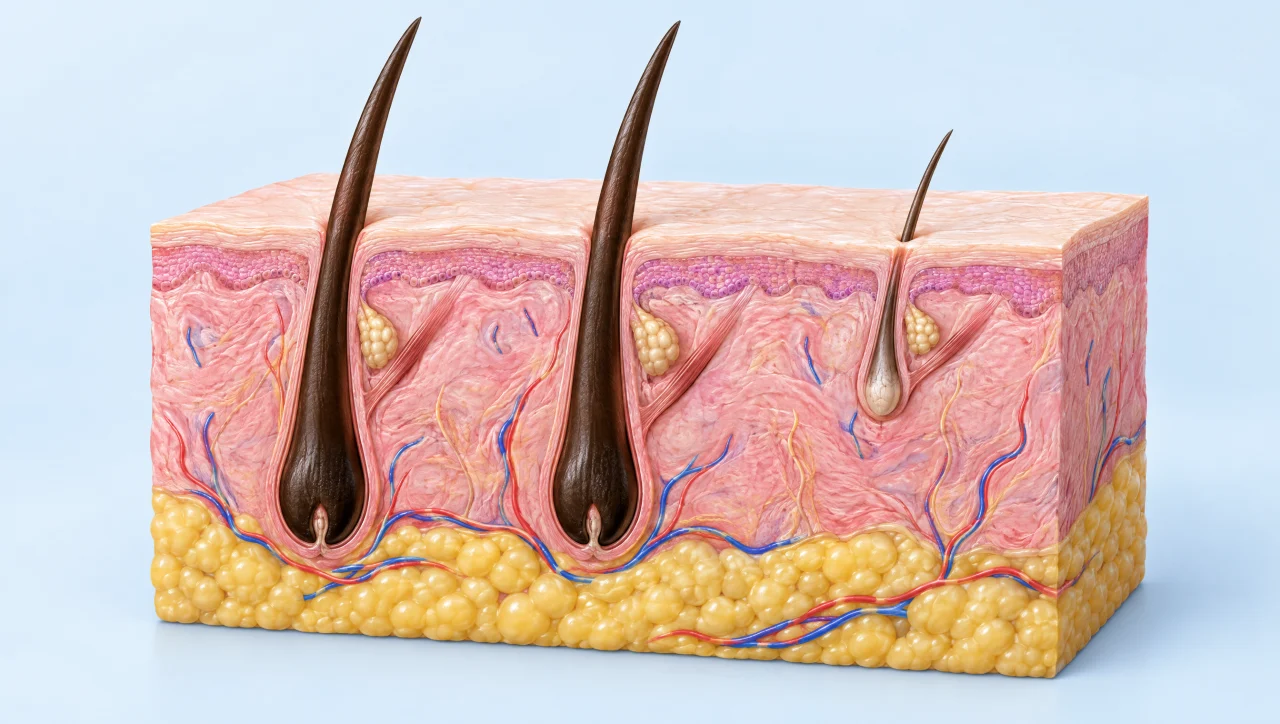
The principle is called selective photothermolysis, first described in the journal Science in 1983. Light of a wavelength that a particular colour absorbs well is delivered in very short pulses. The heat then concentrates in pigmented structures rather than in the surrounding tissue. Hair removal lasers and IPL use light at 600–1,200 nm, which melanin absorbs. The heat builds up in the melanin of the hair shaft, the follicle lining and the hair matrix that makes the hair.
That is why the colour contrast between hair and skin matters so much:
- Dark, thick hair: more heat gathers in the hair. ESLD guidelines describe the ideal candidate as having fair skin and dark, thick hair.
- Light hair: blond, grey and white hair have little melanin and do not respond to treatment, the guidelines say. A 2026 review also found that light-coloured hair responds poorly.
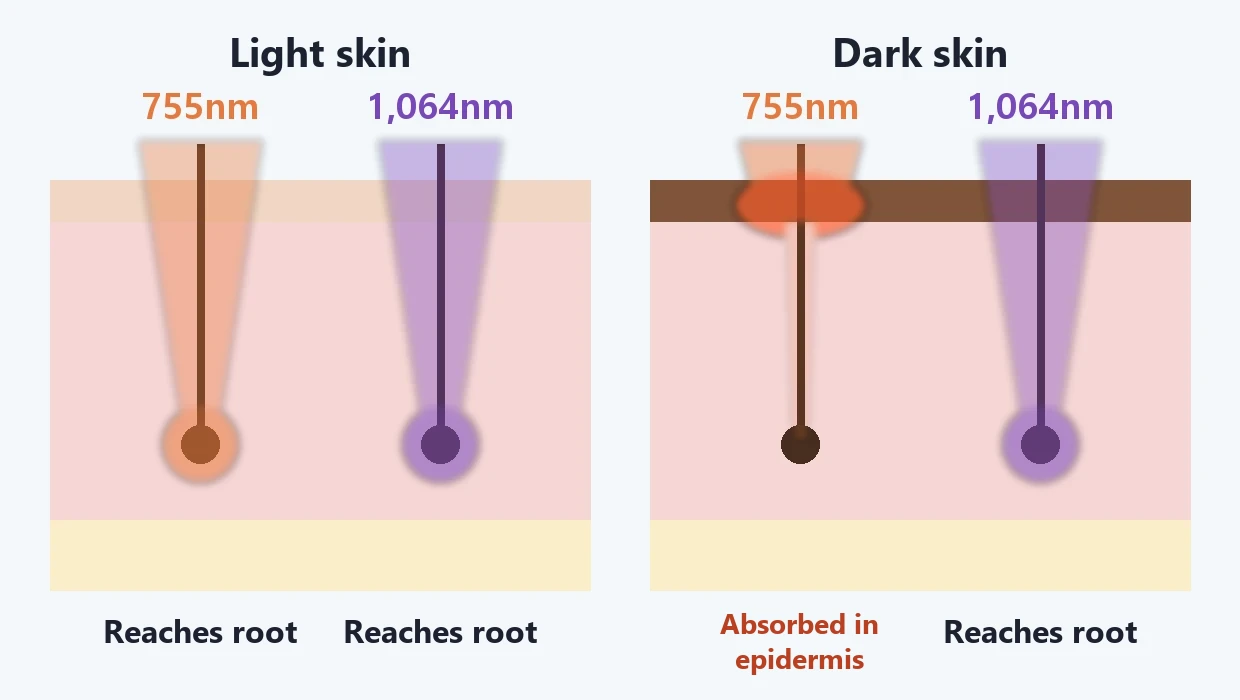
- Dark or tanned skin: melanin in the skin surface competes for the light. This raises the risk that the skin, not the hair, heats up.
 Before
 Weeks later
Alexandrite, diode or Nd:YAG laser hair removal, or IPL?
Clinics use many machine names. The simplest way to compare hair removal devices is by the wavelength of light they emit.
| Type | Wavelength | Features | In studies |
|---|---|---|---|
| Alexandrite laser | 755 nm | Strongly absorbed by melanin; suits fair skin with dark hair | About 50% short-term reduction up to 6 months (Cochrane) |
| Diode laser | Around 800–810 nm | Absorbed less by skin melanin than alexandrite, so also used on darker skin | About 50% short-term reduction up to 6 months (Cochrane) |
| Nd:YAG laser | 1,064 nm | Longest wavelength; considered the most suitable laser for heavily pigmented skin | Less hyperpigmentation than IPL in darker skin; highest pain |
| IPL | Mixed wavelengths | High-output visible light, not a laser | Less evidence of effect than lasers |
- IPL vs laser hair removal: Korea’s Ministry of Food and Drug Safety (MFDS) describes IPL as an energy-based device that works on a similar principle but is not a laser. A laser emits a single wavelength, while IPL emits several at once. In the Cochrane review, evidence for IPL, Nd:YAG and ruby lasers was limited compared with alexandrite and diode.
- Long-term numbers vary widely: one systematic review covered at least one hair growth cycle of follow-up. It reported long-term reduction of 30–73.61% for Nd:YAG, 35–84.25% for alexandrite, 32.5–69.2% for diode and 27–52.7% for IPL.
- Differences between lasers are smaller than you might think: a network meta-analysis of 13 randomised trials (652 people) found that the diode reduced hair counts at around 3 and 6 months. It found no significant difference between laser types, and all observed adverse effects were temporary.
- Brand names: devices are cleared one by one. For example, the US FDA clearance for the GentleMAX family states that its 1,064 nm wavelength is cleared for all skin types (Fitzpatrick I–VI), including tanned skin. In Korea, you can check approved laser devices in the MFDS medical device product database.
Dr. Park’s view is that avoiding side effects comes before chasing the strongest effect. Laser hair removal always works on the line between effect and burns. That is why he considers a doctor with a lot of hair removal experience more important than the machine name.
Laser hair removal for dark skin
A 2026 review in the Journal of the American Academy of Dermatology addressed darker skin (Fitzpatrick IV–VI). In these skin types, melanin in the skin competes with the hair for the light. This raises the risk of hyperpigmentation, loss of pigment, blisters and scarring. Longer wavelengths are absorbed less by the skin surface. Long-pulsed 800–810 nm diode lasers are absorbed less than alexandrite, so they can also be used on darker skin. A meta-analysis of 12 studies in Fitzpatrick III–VI skin found that Nd:YAG caused less post-inflammatory hyperpigmentation than IPL. Hair reduction with Nd:YAG and diode did not differ statistically from IPL, but pain scores were higher with lasers.
| Skin and hair | What studies and guidelines say | What is considered |
|---|---|---|
| Fair skin, dark hair | The combination that responds most reliably | Alexandrite or diode |
| Darker skin (Fitzpatrick III–VI) | Nd:YAG causes less hyperpigmentation than IPL | Longer wavelength, cautious settings, enough cooling |
| Recently tanned skin | Most unwanted reactions occurred in tanned or darker skin (900 treatments analysed) | Wait until the tan fades |
| Blond, grey or white hair | Does not respond | Discuss other methods |
Laser hair removal side effects, including paradoxical hypertrichosis
No treatment is free of side effects. In the Cochrane review, pain, redness, swelling, burnt hairs and pigment changes were reported infrequently. However, skin colour, tanning and settings change the risk.
- Redness and swelling: redness around the follicles is the most common reaction. The AAD says common side effects are mild and last 1–3 days.
- Burns, blisters and pigment changes: in a retrospective analysis of 900 treatments, most unwanted reactions occurred in tanned skin or Fitzpatrick type III and above. That analysis found no infections, scars or long-term complications. The AAD notes that burns, permanent changes in skin colour and scarring can occur. In an analysis of 50 adverse events from treatments by non-medical operators, pigment changes occurred in 81.4% and scarring in 25.6%. The causes included excessive energy, the wrong device, treating dark or tanned skin, and no cooling.
- Folliculitis: this is a reported skin complication. Dr. Park explains that it is an infection: bacteria multiply around weakened skin and pores, so it needs medication rather than simply waiting.
- Paradoxical hypertrichosis: this means hair increases in or around the treated area. A meta-analysis of 9,733 people put the prevalence at 3%, linked to the face and neck, and 0.08% elsewhere. Device type and treatment interval did not affect it, and in 3 of 4 studies it gradually improved with continued treatment.
- Eyes: reported injuries include uveitis, iritis, iris damage, pupil distortion and cataract. In one case, glare remained 6 months after alexandrite treatment near the eyelid. A review says eye injuries can be systematically prevented, and the AAD says everyone in the room must wear eye protection.
- Moles and tattoos: moles treated during hair removal often shrank, faded or darkened and could look atypical. No malignant change was reported, but unusual moles should be examined first and avoided. A second-degree burn within a tattoo was reported after IPL over the tattoo.
Contact the clinic that treated you right away in these cases: blisters, severe or persistent pain, redness or swelling that gets worse instead of settling, or pus-filled bumps. You should also contact the clinic if your eyes hurt, light seems unusually glaring, or your vision is blurred after treatment.
Before and after laser hair removal: no tanning, shave don’t pluck
- No tanning: the ASDS advises avoiding sunbathing, tanning beds and waxing for 2 weeks before treatment. The AAD adds self-tanning products to that list.
- Shave, don’t pluck or wax: the laser targets the hair inside the follicle and its melanin. Plucking or waxing removes that target root and all. If the hair bothers you between sessions, shave it.
- Sun afterwards: the ASDS advises avoiding direct sunlight for at least 1 week after treatment. The AAD recommends a broad-spectrum sunscreen of SPF 30 or higher every day before going outdoors.
- Heat and irritation: the MFDS guide notes that redness, swelling and a burning feeling can last a few days. It advises avoiding strong UV and heat or irritation such as saunas.
- Tell the doctor beforehand about: possible pregnancy, recent tanning or strong UV exposure, and photosensitive skin. Also mention a tendency to scar or form keloids, cold sores or genital herpes, allergy to local anaesthetics, and medicines such as isotretinoin.
- Isotretinoin: product labelling still recommends stopping 6 months before procedures. However, an ASDS task force and an expert consensus found insufficient evidence to delay laser hair removal while taking it or after recently stopping. Decide this with your doctor.
- Pregnancy: a review found no definitive safety recommendation can be made for most laser treatments in pregnancy. It suggested postponing elective cosmetic procedures until after delivery.
Laser hair removal is also not something you have to have. Dr. Park recommends it when hair grows back fast and thick enough to be uncomfortable. Otherwise, he considers it your own choice.
 Before
 After several sessions
Is laser hair removal permanent?
“Permanent laser hair removal” is a common phrase, but research and US clearance documents mean something narrower. The FDA clearance for the GentleMAX family lists two intended uses: “temporary hair reduction” and “stable long-term or permanent hair reduction”. It defines permanent hair reduction as a long-term, stable reduction in the number of hairs regrowing, measured 6, 9 and 12 months after a course of treatment. It does not mean that no hair grows back.
The studies say the same. An evidence-based review of 30 controlled studies found that lasers and IPL are more effective than shaving, waxing and electrolysis. It found evidence of partial long-term reduction after repeated alexandrite and diode treatments, but no evidence of complete and persistent hair removal. The Cochrane review also found no treatment proven to give long-term hair removal. A 2026 review concluded that lasers achieve meaningful long-term reduction but do not completely destroy the follicles. The honest expectation is fewer, often finer hairs that take longer to grow back, possibly with occasional maintenance sessions.
Laser hair removal in Korea: planning sessions around a Seoul trip
For patients from abroad, the deciding factor is not the country but skin colour and hair colour. Dr. Park explains that skin colour completely changes the wavelength and settings. For very dark skin the risk of side effects rises greatly, and blond or white hair barely responds. Kondae PPEUM Clinic is directly connected to Konkuk Univ. Station Exit 1. Before you book, plan the following:
- One trip is usually one session: sessions are about 4–6 weeks apart, so a short stay will not complete a course. Plan to continue on later trips or at a clinic at home.
- Tell your home clinic the device and wavelength: note the device type, wavelength and area treated, so the next clinic knows where you are starting from.
- Mind the sun: do not arrive freshly tanned, and keep direct sun off the treated area for at least a week afterwards. Plan beach days and outdoor sightseeing around that.
- Know who to contact: if blisters, pus or worsening redness appear after you fly home, contact the treating clinic and get local medical care.
For general trip planning, see our Korea medical tourism guide and the first-time Korean clinic guide.
DR.BAQUO’s Answers on Laser Hair Removal
These are the answers Dr. Park Hwonham, Medical Director of Kondae PPEUM Clinic, gave in November 2026 to questions patients often ask about laser hair removal.
There are so many laser hair removal machines. Which one would you use for me?
“With hair removal, I think how well you avoid side effects comes before how effective it is. Adjusting the settings to conditions such as skin colour, area and hair thickness is basic. Equipment with good laser quality and cooling performance also helps make up for a practitioner’s limited experience and skill. But laser hair removal always takes place on the borderline between effect and burns. To keep skin damage to a minimum, the practitioner’s extensive experience matters more than anything. That is why I think finding a doctor with a lot of hair removal experience is more important than choosing by equipment.”
How many sessions do underarms and Brazilian actually take, and how many weeks apart?
“Generally, after 5–10 sessions about a month apart, people at least notice that their hair takes longer to grow back. Some people hope for hair that does not grow back for more than a year even without any shaving. That depends entirely on the situation, and no one can promise it.”
What should I do if my skin turns red and bumpy or the hair comes back after laser hair removal?
“Watch most for inflammatory symptoms such as itching, pain, swelling and redness, or blisters. If they appear, contact the clinic for appropriate treatment or advice. Folliculitis is a slightly different case. It is an infection in which bacteria have multiplied around weakened skin and pores, so it definitely needs medication. If an inflammation that fills with pus develops, contact the clinic in the same way. Hair coming back up is nothing unusual.”
Are there people who should put off laser hair removal or not have it at all?
“When hair grows back fast and thick enough to be uncomfortable, I recommend it so you can live more comfortably. Otherwise, I think it is your own choice.”
What is different when you come from abroad for laser hair removal?
“It is not the country but, precisely, skin colour that completely changes the wavelength and the various settings. A laser is an optical device that uses the fact that different colours absorb light to different degrees. For people with very dark skin, the risk of side effects rises greatly, and white or yellow (blond) hair barely responds.”
Laser Hair Removal Price in Korea
Kondae PPEUM Clinic’s published first-visit price for women’s underarm laser hair removal is 5 sessions for KRW 19,000 (first-visit price, subject to change). For other areas, such as Brazilian, face, legs or men’s beard, the cost depends on the area, the device and the number of sessions. Confirm these at consultation. When comparing clinics, compare the same area and number of sessions.
FAQ — Laser Hair Removal
Q: How many sessions does Brazilian laser hair removal take?
A: Few studies measure the Brazilian area on its own, so there is no research figure specific to it. Guidance uses several sessions about 4–6 weeks apart. In Dr. Park’s practice, people usually notice slower regrowth after 5–10 monthly sessions. The strength is adjusted to the skin type and area.
Q: How many sessions of laser hair removal do underarms need?
A: In a Korean study, three sessions of 805 nm diode laser reduced underarm hair by 38.7–50.1% at 3 months. Underarm hair has a growth cycle of about seven months, and continuing to about 5–10 monthly sessions is common in Dr. Park’s practice. Hair coming back between sessions is normal.
Q: Can I get laser hair removal on dark skin?
A: Yes, but the risk of burns and pigment changes is higher, so the wavelength and strength matter. In darker skin, the longer-wavelength Nd:YAG (1,064 nm) caused less hyperpigmentation than IPL. If you are recently tanned, wait until the tan fades.
Q: Is laser hair removal more effective than waxing or shaving?
A: An evidence review of 30 controlled studies found lasers and IPL more effective than shaving, waxing and electrolysis. The effect improved with repeated treatments. However, there was no evidence of complete and persistent hair removal.
Q: Does laser hair removal work on blond, grey or white hair?
A: Guidelines say these hair colours have little melanin and do not respond. Dr. Park also notes that white or blond hair barely responds, so other methods are discussed at consultation.
Q: Can I pluck or wax between laser sessions?
A: It is better not to. Plucking and waxing remove the hair root the laser targets, and the ASDS advises no waxing for 2 weeks before treatment. Shave instead.
Q: How much is laser hair removal in Korea?
A: It depends on the area, the device and the number of sessions, so confirm the cost at consultation. The published first-visit price for women’s underarms (5 sessions) at Kondae PPEUM Clinic is listed in the price section above.

Related Before & After Cases and Guides
- Hollow Temples Treatment in Korea: Gouri & HILO WAVE Before and After
- Skin Booster Before and After Korea — Gouri + HILO WAVE Results
- Lip Filler Before and After Seoul — DR.BAQUO Results
- Cheek Filler Korea: Get Natural Volume in One Day
- Double Chin Treatment Korea: Seoul's Most Effective Fix
- Before & After gallery (members)
Sources
- Anderson RR, Parrish JA. Selective photothermolysis. Science, 1983. PubMed 6836297
- Vaidya T et al. Laser Hair Removal. StatPearls, 2023. PubMed 29939638
- Gan SD, Graber EM. Laser hair removal — a review. Dermatol Surg, 2013. PubMed 23332016
- Korea MFDS. Safety guide for medical lasers used in skin treatment, 2016 (Korean). korea.kr
- Haedersdal M, Gøtzsche PC. Laser and photoepilation for unwanted hair growth. Cochrane Database Syst Rev, 2006. PubMed 17054211
Show 26 more sources
- Haedersdal M, Wulf HC. Evidence-based review of hair removal using lasers and light sources. J Eur Acad Dermatol Venereol, 2006. PubMed 16405602
- Lian C et al. Paramedian Forehead Flap Hair Removal. Clin Cosmet Investig Dermatol, 2026. PubMed 41804313
- Lepselter J, Elman M. Biological and clinical aspects in laser hair removal. J Dermatolog Treat, 2004. PubMed 15204156
- Krasniqi A et al. Efficacy of lasers and light sources in long-term hair reduction. J Cosmet Laser Ther, 2022. PubMed 35634805
- Drosner M, Adatto M. Photo-epilation — ESLD guidelines. J Cosmet Laser Ther, 2005. PubMed 16020215
- American Academy of Dermatology. Laser hair removal — FAQs. aad.org
- American Academy of Dermatology. Laser hair removal — preparation. aad.org
- American Society for Dermatologic Surgery. Laser Therapy for Unwanted Hair. asds.net
- U.S. FDA 510(k) K133283. GentleMAX Family of Laser Systems — Indications for Use. accessdata.fda.gov
- Dorgham NA, Dorgham DA. Lasers for reduction of unwanted hair in skin of colour. J Eur Acad Dermatol Venereol, 2020. PubMed 31587390
- Kao YC et al. Efficacy of Laser in Hair Removal — A Network Meta-analysis. J Cosmet Laser Ther, 2023. PubMed 37493187
- Dreifus EM et al. Laser and energy-based device use in skin of color. J Am Acad Dermatol, 2026. PubMed 42660430
- Mallat F et al. Adverse Events of Light-Assisted Hair Removal — An Updated Review. J Cutan Med Surg, 2023. PubMed 37272371
- Nanni CA, Alster TS. Laser-assisted hair removal — side effects. J Am Acad Dermatol, 1999. PubMed 10426883
- Snast I et al. Paradoxical Hypertrichosis Associated with Laser and Light Therapy for Hair Removal. Am J Clin Dermatol, 2021. PubMed 34057666
- Crowell EL et al. Alexandrite laser induced uveitis & pigment dispersion. Am J Ophthalmol Case Rep, 2020. PubMed 32181413
- Greveling K et al. Non-invasive anaesthetic methods for dermatological laser procedures. J Eur Acad Dermatol Venereol, 2017. PubMed 28107576
- Roongpisuthipong W et al. Ice packs versus topical lidocaine-prilocaine for pain control in axillary laser hair removal. J Am Acad Dermatol, 2023. PubMed 36410628
- U.S. FDA Public Health Advisory (2009). Potential Hazards of Skin Products Containing Numbing Ingredients (archived). webarchive.library.unt.edu
- Cices A et al. Changes in melanocytic nevi treated with laser hair removal. Lasers Surg Med, 2023. PubMed 37493510
- Second-degree burn within a tattoo after intense-pulsed-light epilation. Photodermatol Photoimmunol Photomed, 2013. PubMed 23815356
- Hammes S et al. Treatment errors resulting from use of lasers and IPL by medical laypersons. J Dtsch Dermatol Ges, 2013. PubMed 23194381
- Waldman A et al. ASDS Guidelines Task Force — procedures during and after isotretinoin use. Dermatol Surg, 2017. PubMed 28498204
- Spring LK et al. Isotretinoin and Timing of Procedural Interventions. JAMA Dermatol, 2017. PubMed 28658462
- Lee KC et al. Safety of cosmetic dermatologic procedures during pregnancy. Dermatol Surg, 2013. PubMed 24164677
- Jo SJ et al. Hair Removal with a Long-Pulsed Diode Laser Depending on the Spot Size. Ann Dermatol, 2015. PubMed 26512165
This is a treatment guide based on published research and society guidance. Results vary between individuals depending on skin colour, hair colour and thickness, area and number of sessions. Doctor’s answers: Dr. Park Hwonham, Medical Director, Kondae PPEUM Clinic, from his review in November 2026.
DR.BAQUO | Hanlim Tower 2F, 229 Achasan-ro, Gwangjin-gu, Seoul | Konkuk University Station Exit 1 (Line 2) | Google Maps | LINE: @364kbfyj | global.drbaquo.com
—
VISIT
Kondae PPEUM Clinic
Dr. Park Hwonham (DR.BAQUO), Medical Director
- Address
- Hanlim Tower 2F, 229 Achasan-ro, Gwangjin-gu, Seoul
- Subway
- Line 2 Konkuk Univ. Station Exit 1 (directly connected)
- Hours
- Mon–Fri 10:00–20:30 · Sat 10:00–16:30 (KST)
 WhatsApp
 LINE

 WhatsApp
 LINE
 WeChat
 Instagram
 YouTube
 TikTok
 KakaoTalk

